
There is a moment in the second act of The Lamplighter’s Oath when Thomas Ashworth, as Edmund Vale, walks onto a completely darkened stage and begins to light the lamps.
There is no electrical effect. No theatrical trick. Felix Wainwright, the Bellvue’s lighting technician, built fourteen model gas lamps and mounted them on posts across the stage, and Ashworth lights each one with a taper. The house is utterly silent. The only sound is the soft hiss of gas and the faint tick of flame catching wick. One by one, the stage fills with warm golden light, and by the time the last lamp is burning, you understand — not intellectually, but somewhere deeper — what Edmund Vale was fighting for.
It is the most beautiful thing I have seen at the Bellvue in twenty years of attending this theatre. Augustin Fell insisted on real flames. He was right.
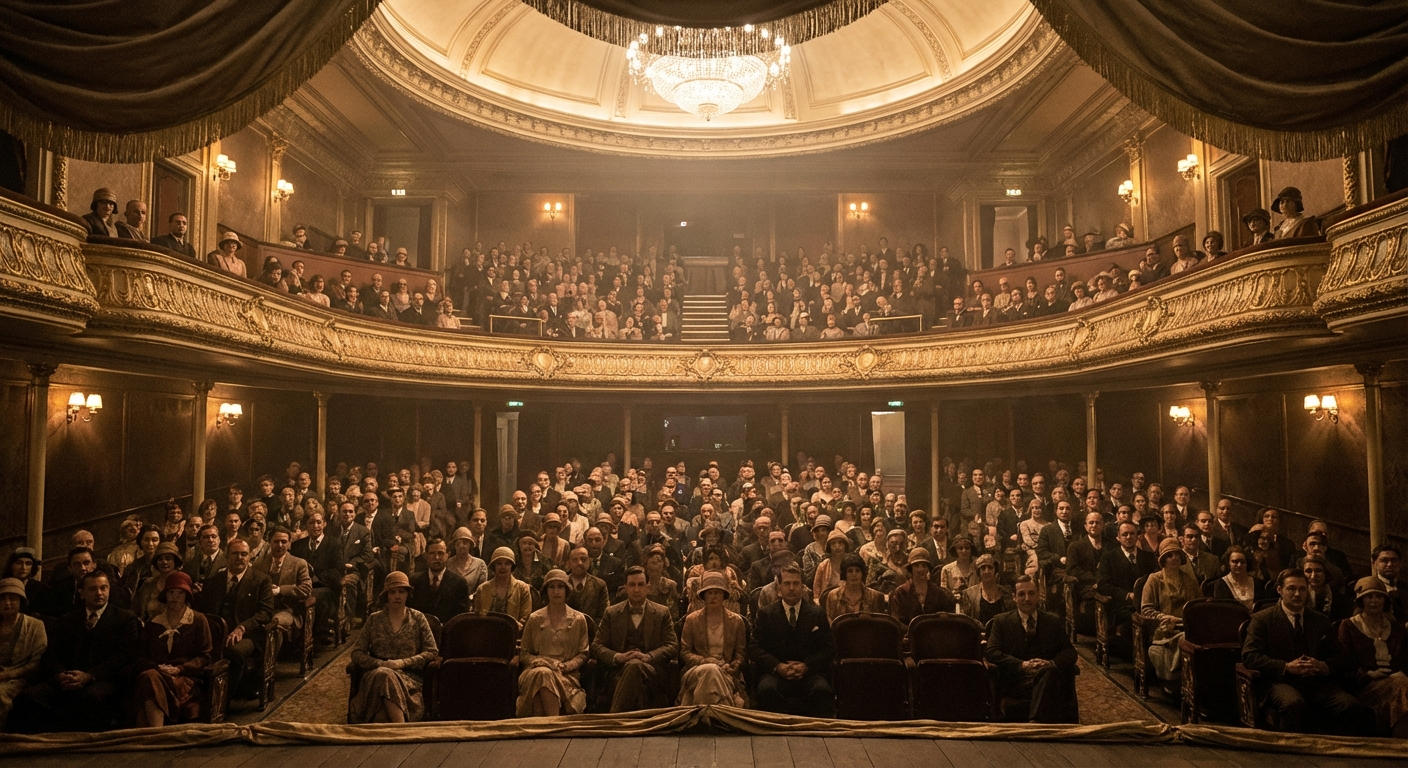
The Lamplighter’s Oath opened last night to a sold-out house of 380 — every seat filled, the first such occasion since Ruben Glass’s farewell performance in The Harbour Bell in 2019. The audience included Glass himself, seated in his reserved front-row aisle seat, who arrived quietly through the stage door at seven fifteen and left by the same route at ten forty without speaking to anyone. The adjacent seat — reserved, as always, for Constance Fell, who ran this theatre from 1971 until her death in 2006 — held an unopened programme.
The standing ovation lasted four minutes. Ashworth stood at the front of the stage looking slightly dazed, as though he had been teaching Year Tens all day and had somehow ended up here. Which, of course, he had.
He is magnificent. His Vale is not a crusader but a patient, stubborn man who believes that light is not a luxury. The pivotal council address in Act III — the speech in which Vale petitions the city to extend gas lighting to the Docklands — has been refined over months of rehearsal into something approaching revelation. Ashworth does not raise his voice. He barely moves. He simply says what he means, and the house holds its breath.
But the evening’s true revelation is Nessa Holloway as Clara, Vale’s daughter. In her first professional engagement, Holloway has found something remarkable: a young woman who is not defined by her father’s cause but has decided, independently, that it is also hers. Her scene with Ashworth at the close of Act II — in which Clara tells Vale she has been lighting lamps in the Docklands herself, without permission — drew an audible gasp from the stalls. Holloway’s Clara does not plead. She does not explain. She simply states what she has done, and dares him to tell her she was wrong.
She was not wrong.
The production carries the weight of everything that preceded it: the fundraising, the benefit night, the 180,200 florins raised from 171 individual donations, the retired stagehands’ letter about line seven, the biscuit tin from Marchmont Street Primary. Ruth Kirby’s stage management is flawless. Line seven — temperamental since 2019, nursed along until the Thurston Brothers arrive on 2 May to begin fly tower repairs — held without complaint through the Act III scene change.
Wainwright’s lighting throughout is extraordinary, not merely the lamplighting sequence. He has conceived each scene as a study in what it means to see and be seen. The pre-dawn Docklands scenes are lit with a cold blue wash that makes the actors look hungry. The council chamber blazes with the hard clarity of gaslight.
There is, inevitably, a politics to this play. A man who believed that working people deserved the same light as the wealthy. A city that resisted, then relented, then celebrated him. Fell has written it with enough nuance to avoid polemic — Vale is sometimes wrong, sometimes too certain of his own righteousness — but the resonance with Bobington’s present is unmistakable.
After the curtain call, Fell appeared at the stage door. His daughter Norah, who has spent the past month processing donations at the box office, stood beside him.
“I have notes,” he said.
First week sold out. Box office open for weeks two and three. Twenty-one performances scheduled, Tuesday through Saturday at 7:30 PM, Saturday matinée at 2:30 PM, through 30 April.
Edgar Tilney, 81, a retired schoolteacher who had not been to the theatre since 1987, was among the last to leave the upper gallery.
“I came because the city came,” he said. “And the city was right.”