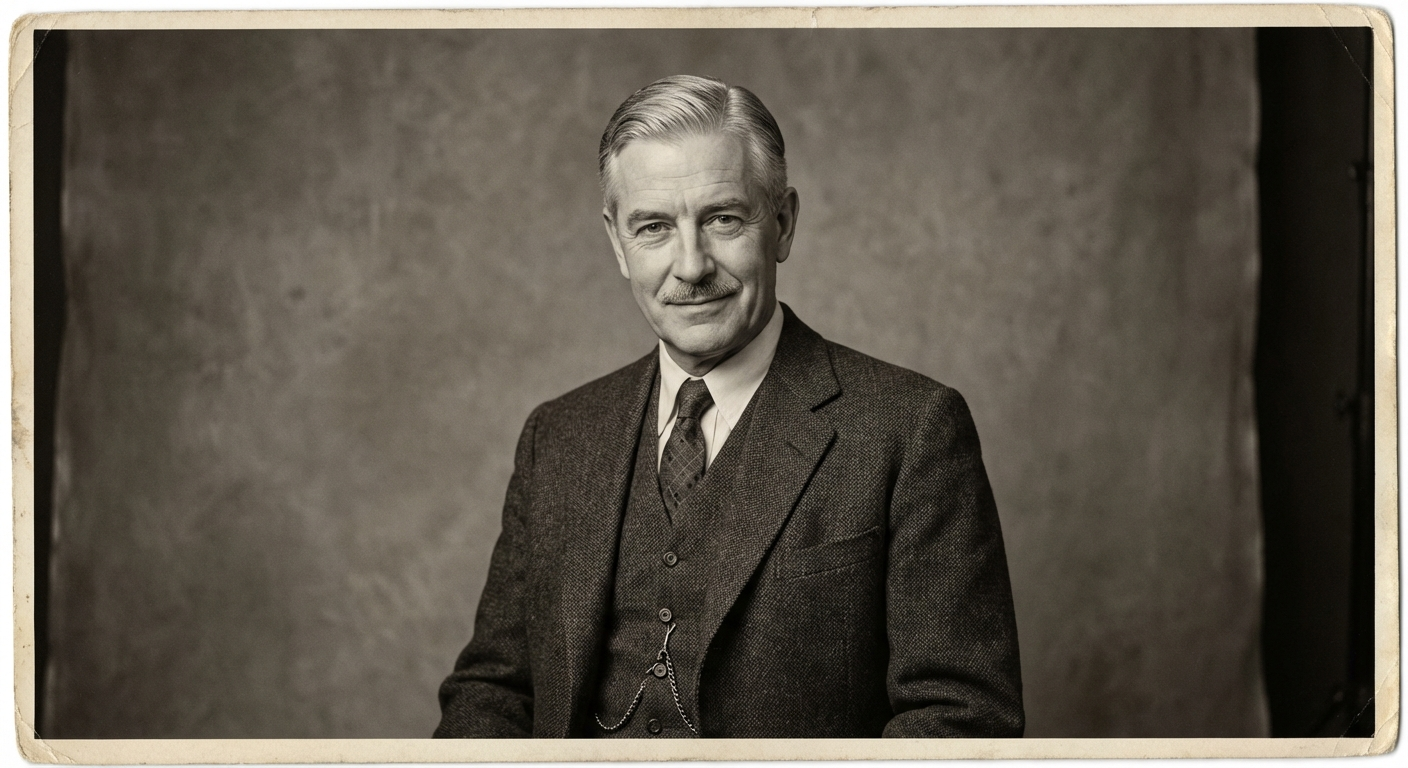
Cedric Haughton and Adelaide Lark departed Bobington on the 6:15 PM express to Caldwell on Friday evening, carrying with them a sealed preliminary assessment of the city’s creditworthiness that will determine, in ways both direct and indirect, whether the phased tramway can be financed on terms the city can afford.
They arrived five days ago on the Sunday express — Haughton, 58, with twenty-three years of municipal debt assessments behind him, and Lark, 24, on her first field assignment. They leave having examined the city’s books, toured the proposed tramway route, reviewed the geological survey mandate, questioned the Deputy Treasurer, and — in Lark’s case — asked rather more questions than anyone expected.
The preliminary assessment was delivered to Annabel Whitford at the Municipal Treasury at 4:30 PM on Friday, approximately ninety minutes before the assessors’ departure. It was contained in the Agency’s standard blue envelope, which Haughton placed on Whitford’s desk with the air of a man delivering a parcel he has weighed very carefully.
The formal rating decision is expected within a fortnight. The bond prospectus, which will be presented to potential subscribers in Caldwell and the major financial centres, is due by 31 March. The prospectus cannot be finalised until the rating is published. The timeline, in other words, is tight.
What is known: the assessment is described by Treasury sources as “constructive but conditional.” The conditions, one may safely assume, relate to the geological survey of the Greymoor Highlands — now mandated and funded, with equipment tenders closing on Saturday — and to the Kaelmar Strait, whose Transit Corridor Framework is scheduled for formal signing on Tuesday.
The completion of the four technical annexes on Thursday, and the Insurance Exchange’s issuance of preliminary underwriting terms on Friday, will not have escaped the Agency’s notice. Copper closed Friday at 762 florins per tonne — well below the 889 figure used in the commission’s overrun calculations and approaching the 740 baseline in the original tramway budget. If copper stabilises in this range, the Phase 1 overrun narrows considerably.
But Haughton is not a man given to premature conclusions. He led the Edgeminster water utility bond downgrade in 2023 — a decision that was controversial, correct, and characteristically unhurried. Sources who have observed his Bobington visit describe a thorough but undemonstrative process: methodical document review, site visits conducted without fanfare, questions asked once and noted.
Lark, by contrast, attracted attention precisely by the volume and specificity of her questioning. On Wednesday — Day 3 of the review — she requested disaggregated copper sensitivity models from the Treasury’s contingency team, a level of detail that prompted one Treasury official to observe, privately, that “the junior assessor appears to be conducting a separate audit.”
Whitford, asked about the assessment process, said: “The Agency has been thorough and fair. We have provided everything requested. The city’s finances are sound, our planning is prudent, and our commitments are funded.”
She was asked whether the preliminary assessment gave cause for concern. “It gives cause for confidence,” she said. Nothing further.
The bond prospectus, when it is issued, will seek to raise approximately 280 million florins for Phase 1 of the tramway — the eight-mile route from Docklands through Midtown to Caldecott Square. The interest rate at which those bonds are sold will depend, in large part, on the rating that emerges from the blue envelope on Whitford’s desk.
Municipal bond yields, which fell from 4.2 to 3.9 per cent on the day of the council’s unanimous vote on 9 March, have held steady through the week. A favourable rating could push them lower still. An unfavourable one — or a conditional one hedged with qualifications — could widen the spread by 40 to 60 basis points, adding millions to the annual debt service.
Haughton and Lark were seen on the platform at Central Station at approximately 5:50 PM. Haughton carried a leather briefcase and a newspaper. Lark carried a canvas bag and what appeared to be three notebooks.
They did not speak to reporters.