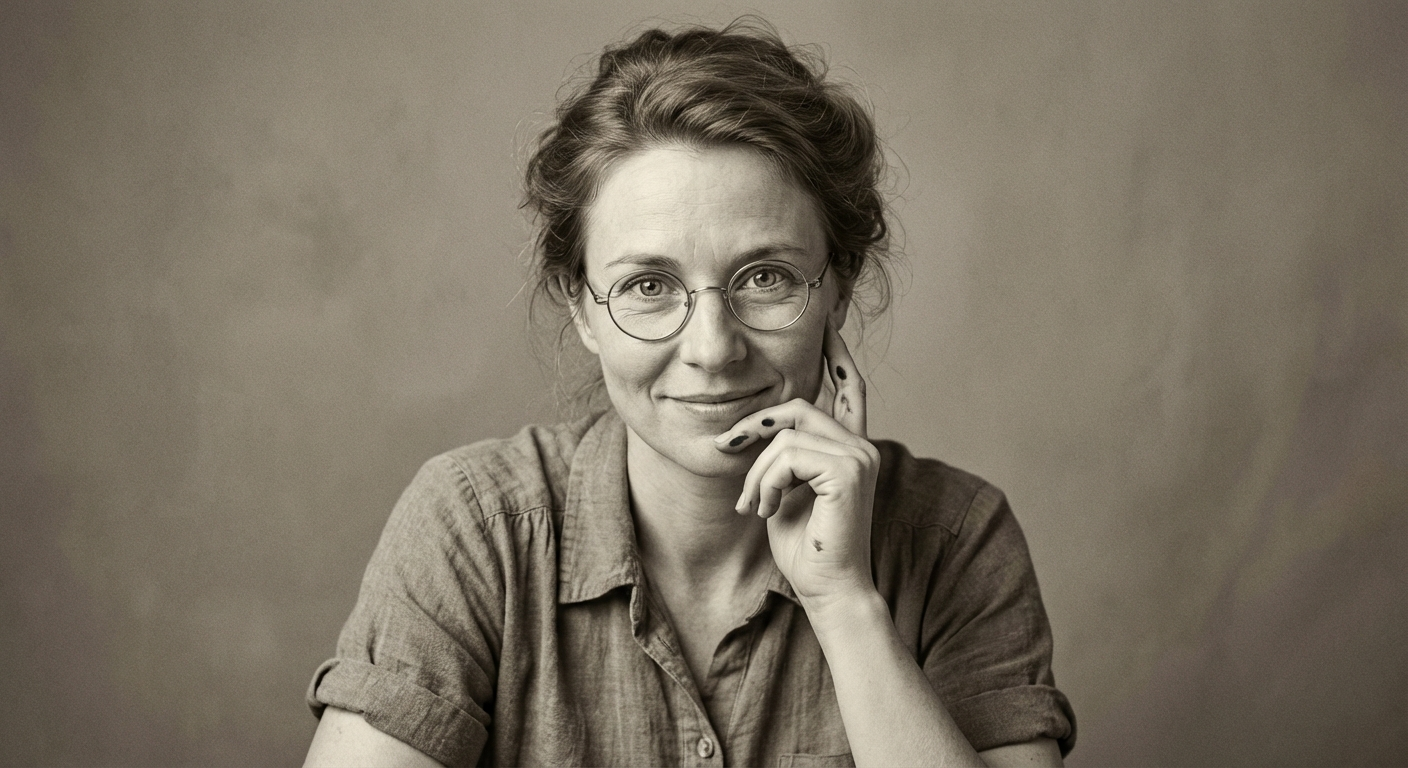
The Founders’ Hall was full at twenty past seven — every seat taken, standing room occupied along the walls and in the doorway, and a small queue still forming on the steps outside when Miriam Aldbury made the apologetic announcement that the hall could hold no more. Approximately three hundred and twenty people heard Dr Maren Huxley speak on Tuesday evening. An unknown number did not.
The lecture was titled “The Shepherd of Dunvale: An Accidental Excavation.” It lasted fifty-five minutes. Huxley spoke without notes, which is unusual for an academic archaeologist and which, in this case, seemed less like confidence than the result of having told the story so many times — to colleagues, to the Heritage Committee, to the construction crew, to the press — that the facts have settled into the shape of a narrative.
She began with the discovery. On 19 March, during drainage trench excavation approximately twelve metres east of the sealed mine entrance at Dunvale, foreman Callum Sayer’s crew uncovered skeletal remains. Sayer halted work immediately. Huxley was called from the Polytechnic.
The lantern slides were methodical: the excavation grid, the position of the remains, the stone lining of the grave, the east-west orientation consistent with Christian burial. An adult male, mid-thirties, approximately five feet seven inches. No evidence of violence. No coffin — a simple stone-lined cavity, sealed with flat slabs.
“He was buried with care,” Huxley said. “Not with ceremony, perhaps, but with the attention of someone who knew him.”
The dating — radiocarbon analysis performed by the Caldwell University laboratory — placed the remains at 1680 to 1710, with a central estimate of approximately 1695. This placed the burial within the period of the earliest parish records maintained by St Cuthbert’s Church in Dunvale village.
Here, Huxley yielded the podium to the Reverend Edith Blackwood, who had driven from Dunvale for the occasion. Blackwood read the ledger entry, as she had read it at the gravesite in March, in a clear, unhurried voice:
“Thos. Garland, a shepherd of the high ground, who desired burial where he could see the vale.”
The date of entry: 1698.
“The handwriting,” Blackwood added, “is not beautiful. The ink has faded. But the words are precise, and they have survived three hundred and twenty-eight years. The shepherd asked for one thing, and the parish gave it to him.”
Huxley described the decision to leave the remains in place. The construction crew had rerouted the drainage trench by four metres. Sayer had set a flat sandstone marker — sourced from a quarry near Dunvale — inscribed with Garland’s name and the year 1698. The memorial to the forty-one miners killed in the 1963 disaster will be built around, not over, the shepherd’s grave.
“Thomas Garland,” Huxley said, “has been where he wanted to be for more than three centuries. It would have been a particular kind of arrogance to move him.”
The question period lasted thirty minutes. A schoolteacher from Dunvale — Martha Grieve, who had also attended Nettleford’s lecture the week before — asked whether further remains might be found as construction continued. Huxley said it was possible but unlikely; the 1698 entry was the only parish record suggesting a highland burial.
A young man in the third row asked whether Garland had any living descendants. Blackwood said the ledger contained no further mention of the name. “He may have been the last of his line,” she said. “Or the first. We do not know.”
Bess Holloway sat in the front row throughout, beside her son Michael. She had said nothing during the lecture. At the close, as the audience began to applaud, she stood — slowly, with Michael’s hand beneath her elbow — and the hall fell quiet.
“We came to Dunvale to remember forty-one men,” she said. “We found a forty-second. And we did right by him too.”
The ovation lasted nearly two minutes. Huxley stood at the podium with her hands at her sides. Blackwood held her parish ledger to her chest.
The closing lecture of the spring series — the fifth and final — is confirmed for 29 April. Professor Aldous Nettleford of Caldwell University will return to present updated findings from the Greymoor geological survey.