
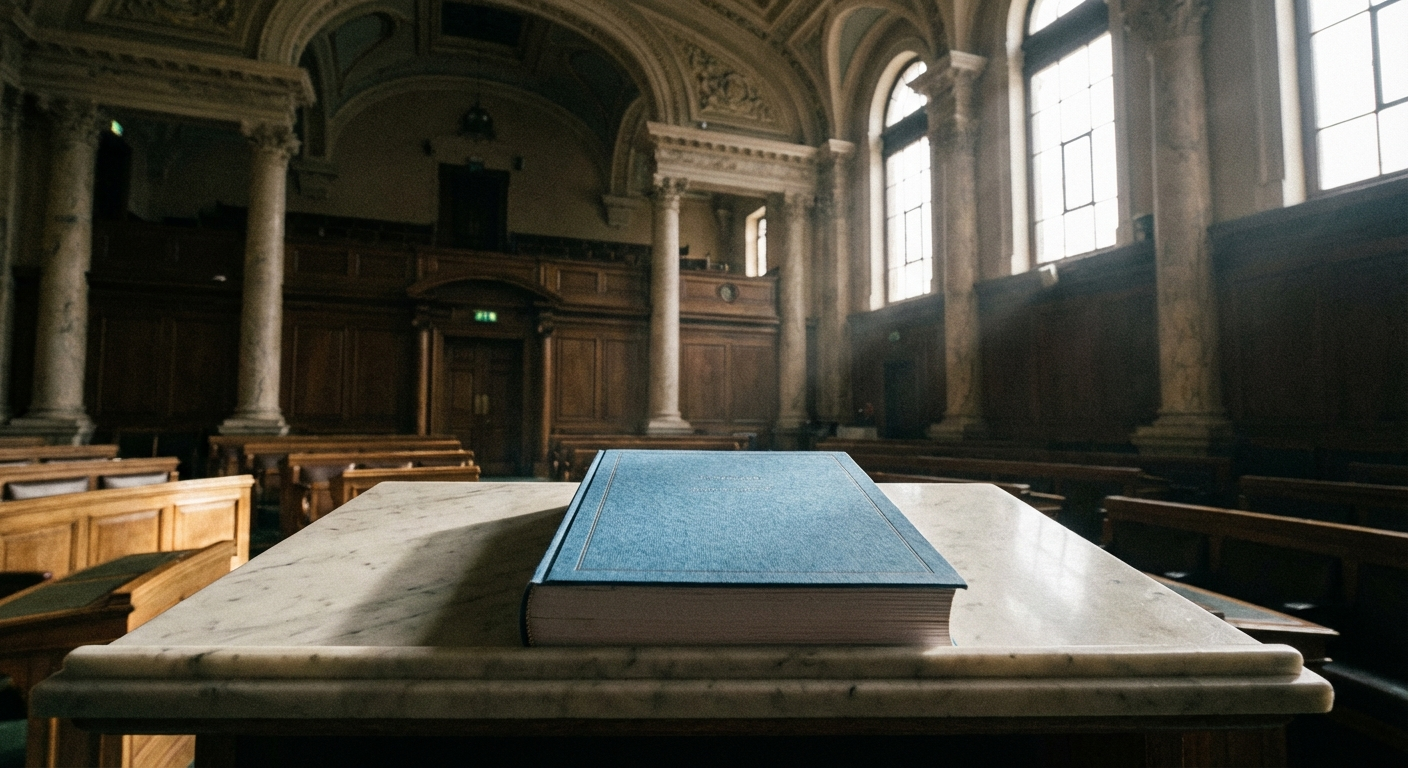
The Copper Review Commission released its interim report at half past nine on Saturday morning, and the document — 34 pages, bound in blue card, delivered by messenger to the Municipal Chamber — reads like a city learning to be honest about what it can afford.
The headline recommendation is unambiguous: a phased approach to the Veridan Corridor Tramway, with Phase 1 to proceed at full copper specification and Phase 2 deferred until copper prices stabilise and domestic supply questions are resolved. The report retains the full copper specification as a contingent alternative, to be revisited only if the Kaelmar diplomatic process produces “a durable resolution to the strait closure within the commission’s reporting period.”
Three of the original five options have been eliminated. Aluminium substitution, which would have halved the system’s lifespan to thirty years, was dismissed on engineering and economic grounds. Outright suspension was rejected as fiscally punitive — the report estimates termination penalties and idle costs of 195 to 220 million florins. The modified scope option, which would have reduced copper usage by thirty per cent through design compromises, was folded into the phased framework.
The Shape of Phase 1
Under the commission’s primary recommendation, Phase 1 would encompass the first seven of the tramway’s planned twelve stations, running from the Docklands terminus through Midtown to the Caldecott Square interchange. This represents approximately 8.2 miles of the planned 14-mile route and would require an estimated 5,200 tonnes of copper — less than half the full system’s 12,000-tonne requirement.
The projected overrun for Phase 1, at current copper prices, is approximately 280 million florins above the original full-project budget allocation. Chief Engineer Yara Okonkwo’s office has confirmed the figure is consistent with the engineering analysis presented to the commission on Wednesday by Municipal Engineer Dorothea Kinnear.
“The numbers are large,” the report states. “They are also honest. The commission prefers honest numbers to comfortable ones.”
Phase 2 — the remaining five stations from Caldecott Square through Upper Fernwich — would be deferred for a minimum of two years, with construction contingent on three conditions: a resolution or significant easing of the Kaelmar copper supply disruption, completion of the geological survey, and council approval of a revised financing plan.
The Geological Mandate
Perhaps the most consequential section of the interim report is not about the tramway at all. The commission unanimously recommends that a comprehensive geological and geothermal survey of the Greymoor Highlands be commissioned “without delay,” at an estimated cost of 1.2 million florins over four months.
The report cites three converging factors: Professor Whitstone’s testimony on declining ore grades at depth, the unmapped north-south fault revealed by seismometer data from the 23 February tremor, and — in a passage that will draw particular attention — the discovery of a geothermal vent system along the Greymoor ridge, documented this week by Dr Odette Collis and Dr Maren Ilkley of the Royal Institute.
“The commission cannot responsibly recommend any pathway that depends on increased Greymoor copper production without first understanding what lies beneath the Highlands,” the report states. “The vent system mapped by Dr Collis and her colleagues suggests a geological reality more complex than previously assumed. We must know what we are building upon before we build.”
Councilman Voss, reached by telephone at his home on Saturday morning, called the geological survey mandate “the most important paragraph in the document.”
“I have said from the beginning that the earth will have the final word on our copper ambitions,” Voss told The Bobington Times. “This report acknowledges that.”
Workers Protected
The interim report endorses the creation of a 14-million-florin transition fund for tramway workers affected by construction delays, citing the precedent of the 2011 dockers’ strike settlement and the testimony of Docklands Workers’ Association foreman Patrick Seldon. The fund would provide eighteen months of half-wage support for workers who have completed specialist training for tramway-related trades.
The report specifically names three workers who appeared in Seldon’s testimony: riveter Ged Halloran, cable-layer Petra Voss, and apprentice welder Samuel Obi. “These are not abstractions,” the report reads. “These are citizens who invested in the city’s future and deserve the city’s investment in return.”
Seldon, who read the interim report at the DWA offices on Harbourfront Parade, told this newspaper: “Fourteen million is a start. We’ll read the final report with care.”
Pryce and Voss: “Not a Compromise”
In a joint statement appended to the report, co-chairs Pryce and Voss describe their recommendation as “not a compromise but a sequence — a recognition that the city’s ambitions need not be abandoned, only ordered.”
The phrasing is notable. Throughout four days of hearings, the phased approach emerged gradually from the testimony of engineers, geologists, financial officials, and working families. Thursday’s closing statements — in which Voss, the tramway’s chief opponent, conceded that “delay has a cost” and Pryce, its champion, acknowledged that “we must not build cheaply what must last a lifetime” — laid the groundwork for what reads as a genuinely bipartisan document.
Speaker Desmond Falk, who received the report at the Municipal Chamber, released a brief statement: “The commission has delivered a serious and careful document. The council will give it the study it deserves.”
Mayor Blackthorne’s office issued a single sentence: “The Mayor has received the interim report and will comment following review.”
What Comes Next
The commission’s final report is due Thursday, 5 March. It will contain detailed costings for Phase 1, a proposed financing structure, a timeline for the geological survey, and the transition fund’s eligibility criteria.
The council is expected to debate the final report the following week. If the phased approach is adopted, Phase 1 groundbreaking — originally scheduled for autumn 2026 — would be contingent on completion of the geological survey, pushing the earliest possible start to late 2026 or early 2027.
Meanwhile, the diplomatic process that may ultimately determine the tramway’s fate continues to develop. Count Viktor Soren, Delvaria’s designated envoy, arrived in Bobington on Saturday morning. The first session of the quiet channel talks is expected early next week. The commission’s report acknowledges, in a carefully worded passage, that “the price of copper is not solely a market question but a diplomatic one, and the city’s future may depend as much on what happens on Chancery Row as on what happens at the Municipal Chamber.”
Copper closed Friday at 872 florins per tonne — down from 891 a week ago, but still well above the 740-florin baseline that underpins the tramway’s original budget.
The blue-bound report sat on the Chamber lectern through Saturday morning, waiting for the council members who will decide what to do with it. By noon, all eleven had collected their copies.