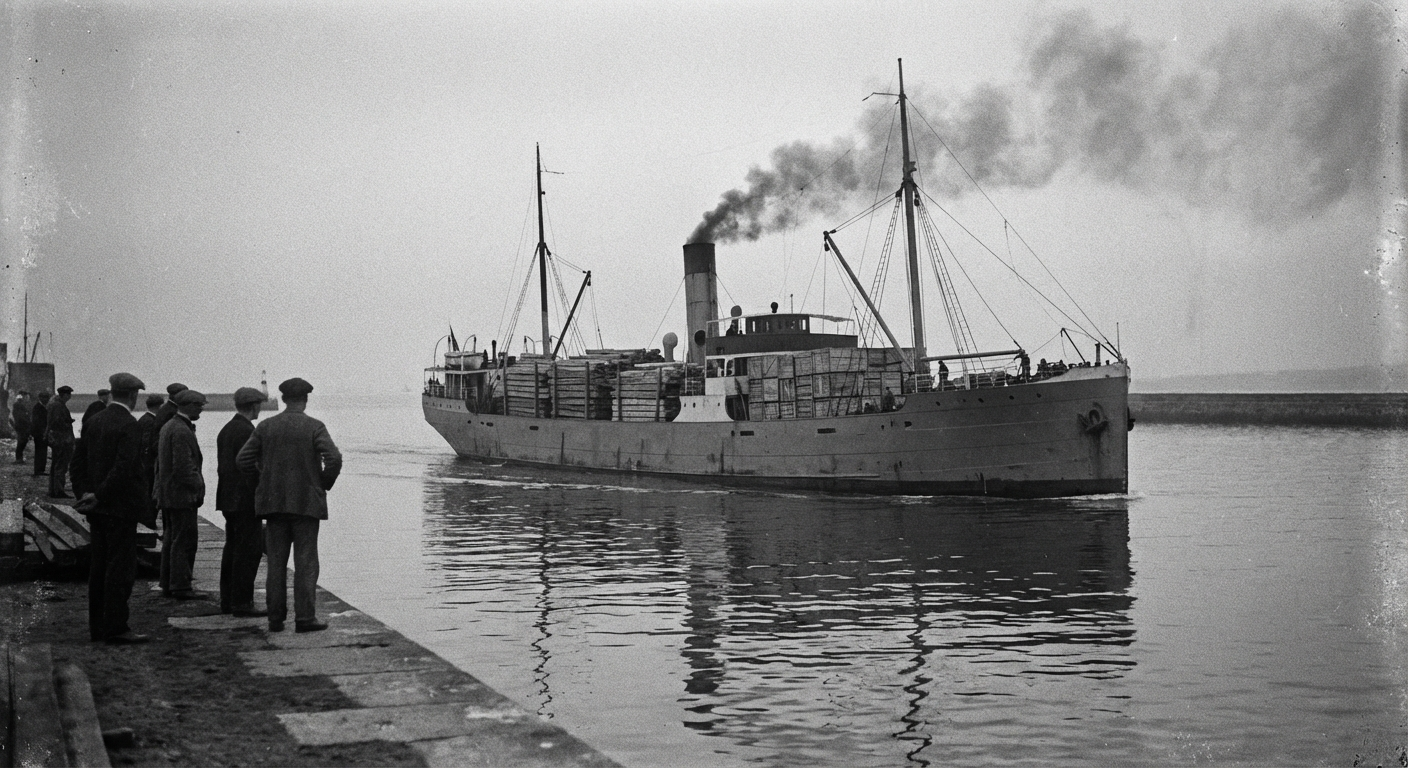
At seven minutes past six on Friday morning, the Kestrel cleared Port Caravel’s outer breakwater and turned east toward the Kaelmar Strait.
She carried 1,200 tonnes of timber, machine parts, and bulk grain. She carried a crew of fourteen. She carried an insurance policy — the first Kaelmar-route policy written in six weeks, underwritten by Fairweather & Chalk, with Sybil Tremayne’s signature on the certificate. And she carried, though her captain would not say so, the weight of a great many people’s expectations.
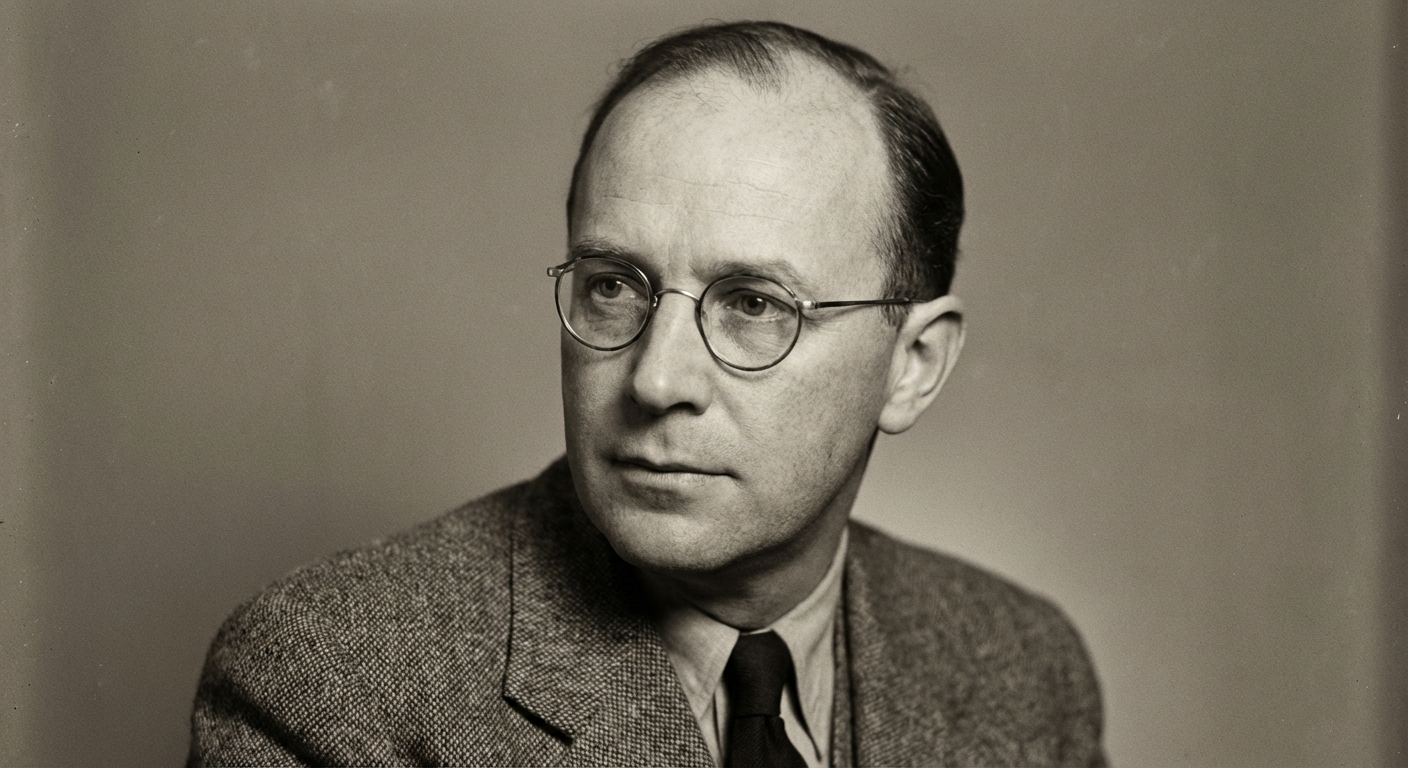
Captain Viggo Hagen, fifty-two, of Kharstad, had been loading at Port Caravel since Wednesday. The timber came from Greymoor. The machine parts were bound for a textile mill in southern Thessara. The grain was Ashwater valley winter wheat, forty tonnes of it, destined for the Thessarine Grain Board at Thessara harbour.
Hagen’s manifest had been submitted to the provisional Joint Maritime Inspection Commission forty-eight hours in advance, as the Transit Corridor Framework requires. It was reviewed. It was approved. The process took, by all accounts, less than ninety minutes.
“The paperwork was straightforward,” Hagen said by radio on Thursday evening, as his crew made final preparations. “I have cargo. I have a route. I have insurance. That is enough.”
It is enough, and it is also more than any commercial captain has had since the crisis began in mid-February. For six weeks, the Kaelmar Strait has been closed to normal commerce — first by the Delvarian naval buildup, then by the collapse of insurance cover, and finally by the slow, deliberate work of negotiation that culminated in the signing of the Transit Corridor Framework on 24 March.
The Kestrel is the first vessel to test the framework’s provisions in practice. She will transit the designated corridor through the northern channel, observing the agreed routing and speed limits. She is subject to random inspection by the joint commission. Her insurance covers hull, cargo, and third-party liability at premiums capped at 140 per cent of pre-crisis rates — the ceiling agreed in the fourth technical annex.
Professor Elias Thornbury, of the Bobington Institute for Foreign Affairs, has been characteristically measured. “If it proceeds without incident,” he said on Thursday, “the second and third will follow quickly. Insurance firms are watching. Other captains are watching. Hagen is carrying rather more than grain.”
Eleven of the fourteen member firms of the Bobington Insurance Exchange are now underwriting Kaelmar-route cargoes. Harbourside Mutual and Blackwell & Pierce remain the holdouts — both citing insufficient data on the inspection protocol’s reliability.
The Kestrel is expected to reach the Kaelmar approach within three days and complete the full passage to Thessara harbour within five. Her progress will be monitored by the commission’s provisional shore stations at both channel approaches.
At Port Caravel, the harbour master’s office reported two additional vessels expressing interest in Kaelmar transit within the next fortnight. One is Thessarine-flagged; the other is registered in the Ashford Republic.
Copper closed Friday at 727 florins per tonne — the twenty-second consecutive decline, and the lowest price since early January. The Eastern Spice Index, which peaked at 356 during the crisis, stood at 254. Both figures suggest a market that has moved well past the crisis and is now pricing in sustained normality.
That normality, for the moment, rests on a single vessel in the eastern approaches, fourteen men, and a stack of paperwork that took five weeks to write.
We await the Kestrel’s arrival.