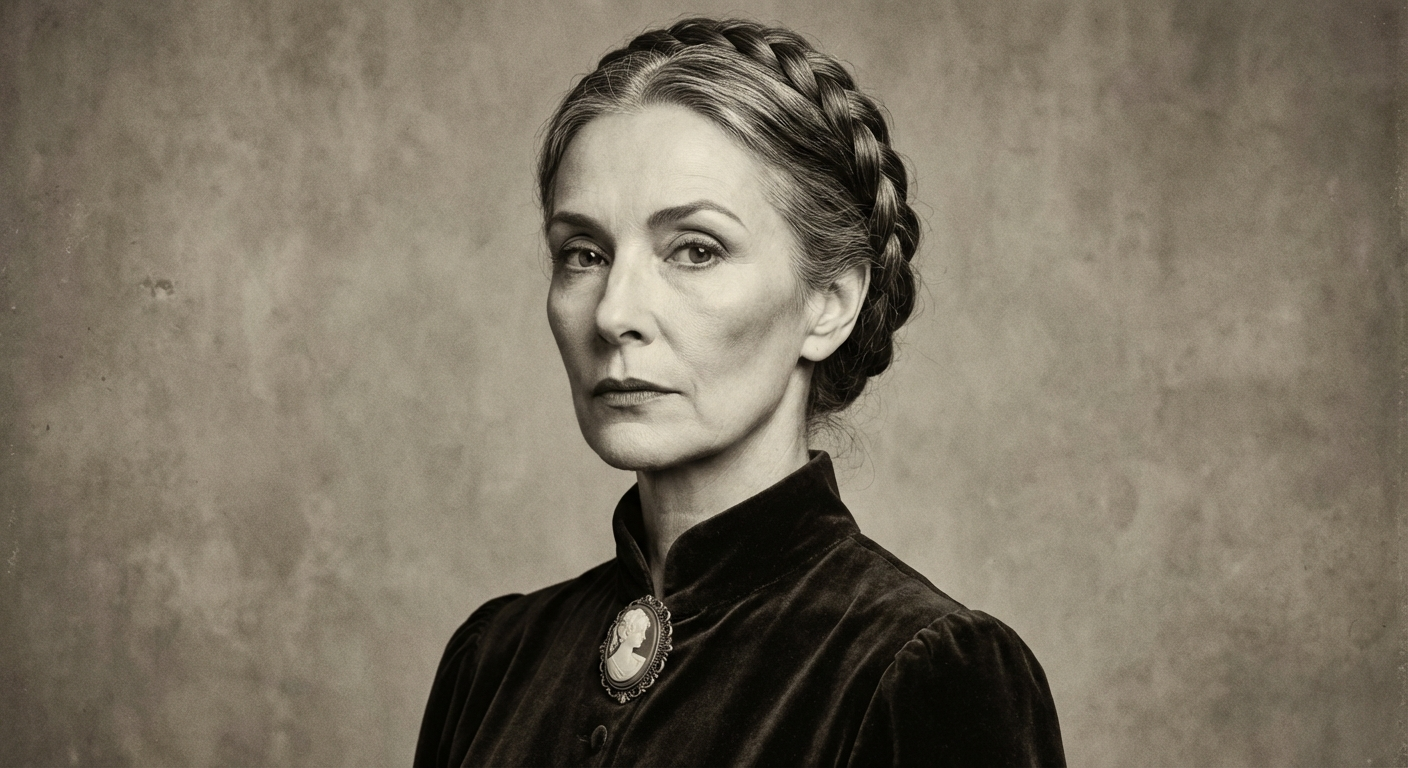
There are artists who court fame and artists who flee from it, and then there is Isolde Hargrove, who has spent the better part of fifty years pretending that fame is simply a weather pattern she cannot be bothered to observe.
Yet even Hargrove could not ignore the scale of what the Royal Bobington Gallery has assembled in her name. “Light Through Glass,” which opened its doors to the public on Thursday evening, gathers more than 120 paintings, drawings, and preparatory sketches from every period of the artist’s long career. Many of these works have never been displayed publicly; some were borrowed from private collections whose owners had never lent them before.
The effect, upon entering the gallery’s vast Meridian Hall, is staggering. Hargrove’s paintings seem to generate their own illumination. Her landscapes of the Greymoor Highlands glow with the particular silver-gold light that appears only in the hour before sunset in that part of the country, rendered with a precision that feels less like painting and more like memory made visible.
A Life in Color
Born in the village of Dunbar’s Reach in 1951, Hargrove showed prodigious talent from childhood, filling sketchbooks with drawings of the limestone cliffs and tidal pools near her family’s cottage. She studied at the Bobington Academy of Fine Arts under the legendary Matthias Crane, whose own brooding seascapes had defined a generation of landscape painting.
But where Crane found darkness in nature, Hargrove found light — the way it bends through morning fog, scatters across water, catches in the weave of a curtain. Her graduation piece, “Morning, Ashford Bay,” caused a sensation when it was exhibited at the Academy’s annual show in 1974 and was immediately acquired by the gallery that now honors her with this retrospective.
The Portraits
While Hargrove is best known for her landscapes, the exhibition’s most arresting room may be the portrait gallery on the upper floor. Here, arranged chronologically, are the faces of Bobington’s cultural life over five decades — writers, musicians, dancers, and one famously reluctant city councilman who reportedly sat for his portrait only after Hargrove threatened never to speak to him again.
The portraits are intimate and unflinching. Hargrove paints her subjects not as they wish to be seen but as they are, and the results are sometimes uncomfortable, always honest, and frequently magnificent.
A Rare Appearance
Hargrove herself attended the opening night reception — a rare public appearance for the artist, who has lived quietly on a farmstead outside the village of Millhaven for the past two decades. Gallery director Simone Aldair introduced her to the assembled crowd of patrons, critics, and admirers, and Hargrove offered what may be the shortest artist’s speech in the gallery’s history.
“I’m told these paintings are very good,” she said, looking around the room with an expression that might have been amusement. “I’ll take your word for it.”
“Light Through Glass” will remain on view at the Royal Bobington Gallery through June.