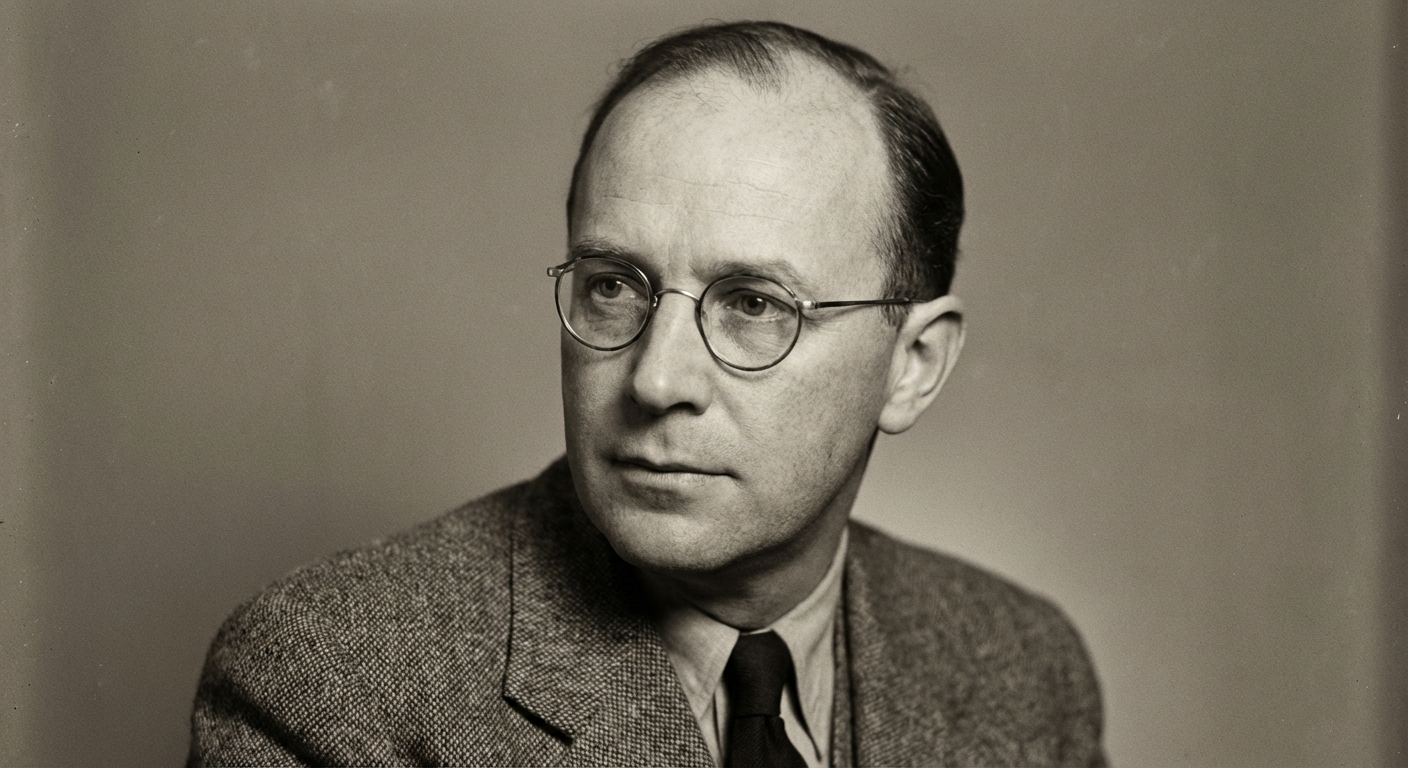
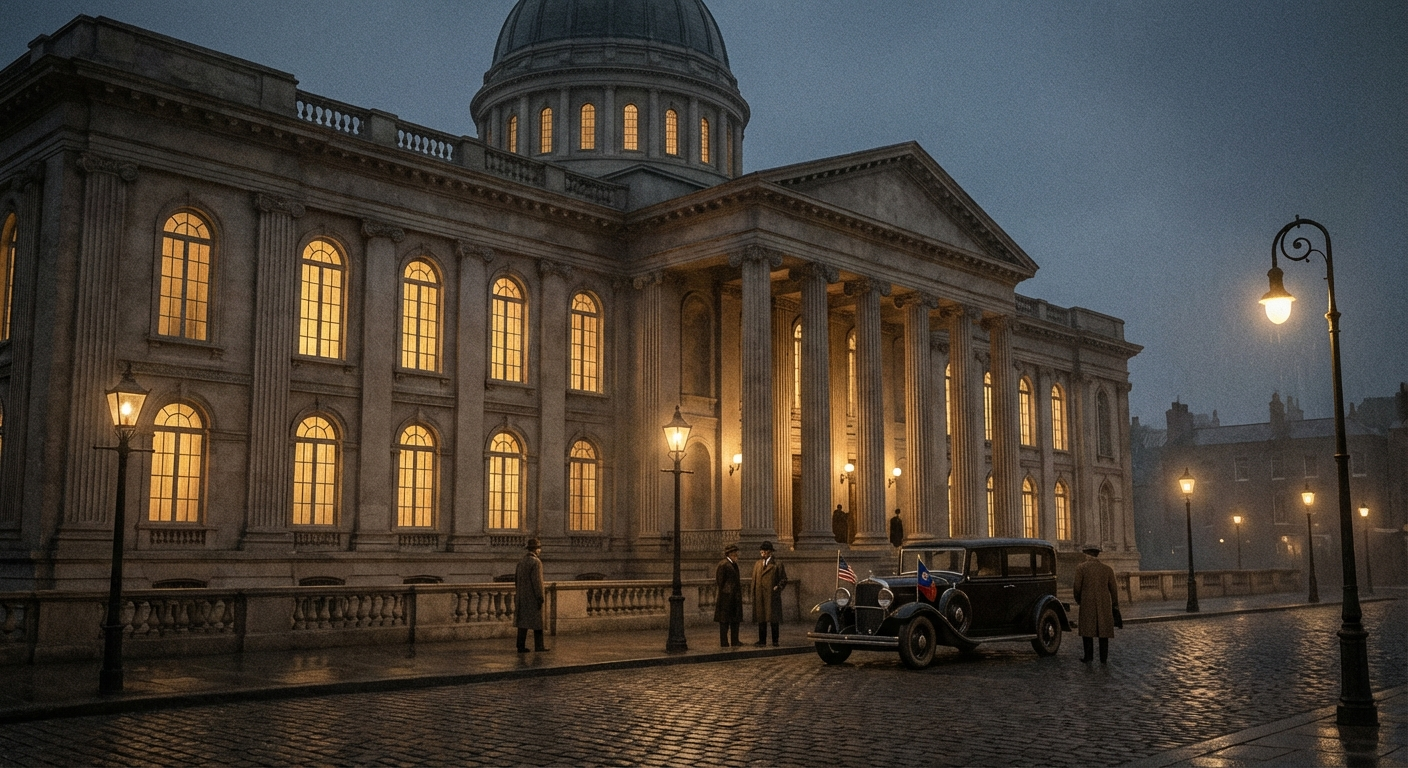
Sir Duncan Hale stepped off the 6:47 evening express from the south on Sunday, carrying a leather attaché case and what sources describe as a cautious but genuine optimism. He was met at Central Station by a Foreign Office car — not the usual formality for a returning diplomat, but these are not usual times.
Fourteen days after boarding a train to Thessara with little more than a handshake and a proposal, Hale returns to find the diplomatic landscape transformed. Count Viktor Soren, Delvaria’s designated envoy, has been installed at the consulate on Ashbury Lane since Saturday morning. Undersecretary Helena Marchetti has spent the weekend preparing a dedicated meeting room at the Foreign Office on Chancery Row, with separate entrance and exit routes, dedicated communications protocols, and what one aide described as “arrangements designed to encourage candour.”
The first formal session is expected Tuesday.
What Has Changed
When Hale left Bobington on 17 February, the Delvarian Empire was conducting live-fire exercises in the Kaelmar Strait and dismissing all diplomatic overtures as “unnecessary interference.” The Kharstad Gazette referred to him as “a Bobington trade official.”
Two weeks later, Delvaria has named a senior envoy — the son of the man who negotiated the Treaty of Ashen Bluffs — and sent him to Bobington by overnight train. The Gazette has adopted a posture of studied restraint, running Soren’s departure in seven lines below grain prices. Copper, which touched 891 florins per tonne at the height of the crisis, closed Friday at 872.
“The machinery of peace is being assembled,” said Professor Elias Thornbury of the Bobington Institute for Foreign Affairs. “What matters now is whether the machinery works.”
The Written Outline
Perhaps the most significant development of the past forty-eight hours is not Soren’s arrival but what Hale is carrying in that attaché case. Sources confirm that a senior aide to Thessarine Foreign Secretary Alaric Daine provided Hale with a written outline of Thessarine priorities before his departure — the first time either party has committed its positions to paper.
The contents have not been disclosed, but the act itself is telling. Written positions are harder to deny, harder to walk back, and harder to misrepresent. They represent, as Thornbury noted, “the difference between talking about peace and negotiating it.”
Daine’s office has been notably measured in its public language over the past week, dropping the earlier characterisation of Delvarian actions as “reckless provocation” in favour of carefully calibrated references to “dialogue consistent with the Treaty of Ashen Bluffs.”
Soren on Ashbury Lane
Count Soren has kept a low profile since his arrival on the 7:14 overnight express from the east on Saturday morning. He was met by Consul Pehr Lindqvist on the platform — the two men reportedly greeted each other warmly — and was driven directly to the Delvarian consulate on Ashbury Lane with three staff members and what station porters described as an unusual volume of luggage.
A Foreign Office vehicle was observed at the consulate between approximately four and half past six on Saturday afternoon. The nature of the visit has not been confirmed, though it is consistent with logistical coordination for Tuesday’s session.
Professor Thornbury, who has tracked Soren’s career for two decades, notes that the envoy’s selection was itself a statement of intent. “His father helped write the rules governing the strait,” Thornbury said. “Sending the son to apply those rules is not accidental. Someone in Kharstad wants this to work.”
What Tuesday Will Look Like
The format will be bilateral: Soren representing Delvarian interests, Hale facilitating on behalf of Bobington. The Thessarine Confederation will participate through the senior aide already assigned by Daine — a trilateral arrangement that respects Delvaria’s insistence on bilateral form while ensuring Thessarine positions are represented.
There will be no published agenda. No joint communiqué is expected. These are the conditions Delvaria demanded and Hale accepted — and they are, in the judgment of most diplomatic observers, the conditions under which progress is most likely.
Marchetti, who served as deputy consul in Thessara from 2014 to 2019 and knows both diplomatic cultures intimately, is understood to have designed the protocols with that in mind. “Helena has built a room where people can speak honestly,” said one Foreign Office source. “The rest is up to them.”
The Wider Stakes
The quiet channel is not merely a diplomatic exercise. One-third of Bobington’s copper imports and roughly half of its eastern spice trade pass through the Kaelmar Strait. The tramway commission’s interim report, released Saturday, assumes a phased construction approach partly because the diplomatic situation has made copper procurement uncertain. The Merchants’ Guild Spice Crisis Committee, meeting tomorrow at Guild Hall, is operating on an eight-to-ten-week supply estimate at rationed levels.
Clement Varga, senior analyst at Fernwich Trading House, said the market is watching Chancery Row as closely as the Municipal Chamber. “A credible diplomatic process puts a ceiling on commodity prices,” he said. “A failed one removes the floor.”
Copper closed Friday at 872 florins per tonne. It has not been below 860 since the crisis began.
The Waiting
Hale is expected to spend Monday at the Foreign Office, reviewing the Thessarine outline and coordinating with Marchetti’s team. Soren, according to sources, will remain at the consulate until the session. The two men have not yet met face to face.
On Tuesday, they will sit across a table from each other in a room on Chancery Row, and the question that has hung over Bobington for the past fortnight — whether the strait can be reopened through diplomacy — will begin to have an answer.
For the moment, the city waits. It has become, in a sense, rather good at that.