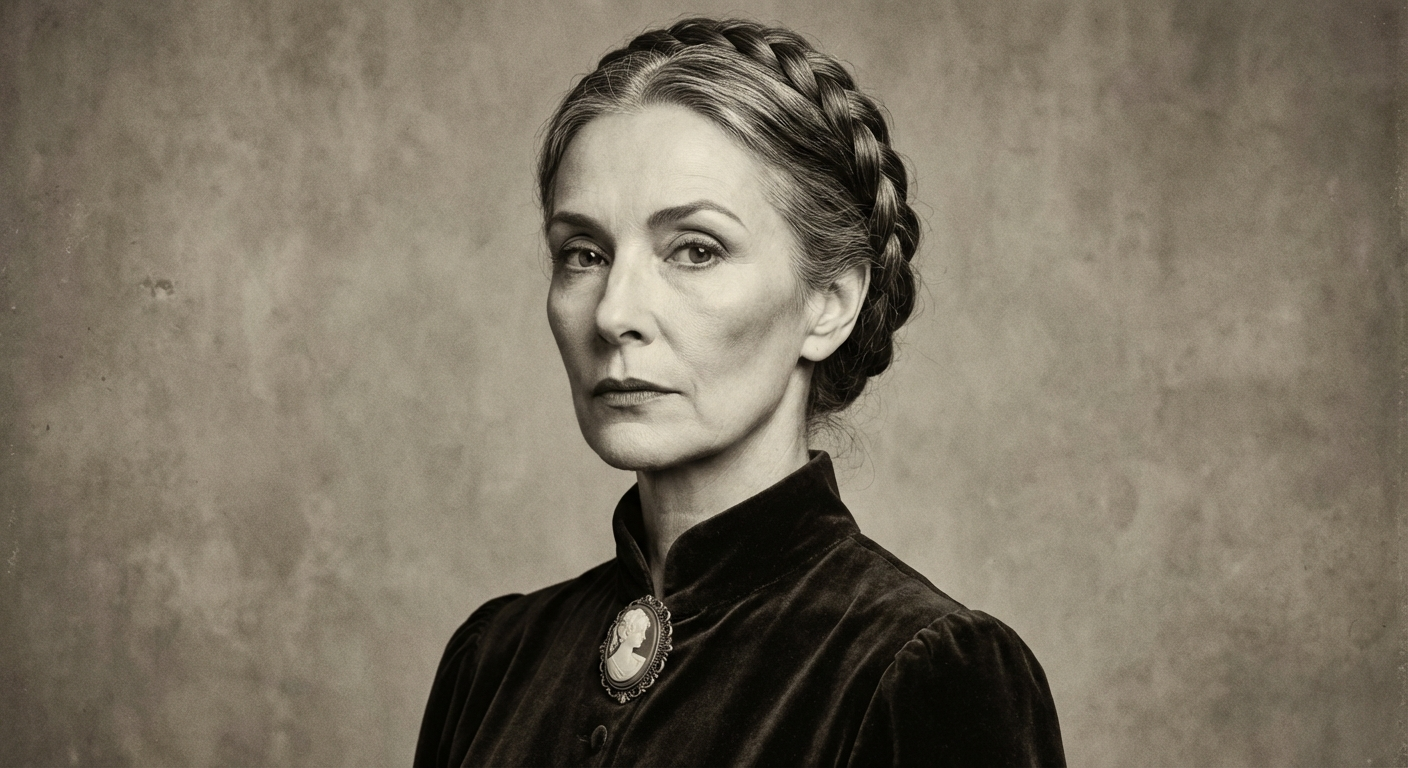
The letter arrived at the Royal Bobington Gallery’s administrative offices at half past nine on Thursday morning, delivered by an elderly man in a waxed jacket who identified himself only as “a friend of Mrs. Hargrove” and departed without leaving a name. It was handwritten on heavy cream paper, in the small, precise hand that Isolde Hargrove’s former students at the Bobington Academy will recognise, and it was addressed to Gallery Director Simone Aldair.
It was also, unmistakably, intended for publication.
Aldair read it, telephoned Hargrove at her farmstead outside Millhaven to confirm its authenticity and her wishes, and within the hour had shared the full text with The Bobington Times and four other publications. The letter, reproduced here with Hargrove’s permission, reads as follows:
Dear Simone,
I write to you because you have been a generous custodian of my work, and because I fear that generosity is being repaid with a spectacle I neither sought nor welcome.
When I agreed to the retrospective, it was because you convinced me — and you were right — that a life’s work deserves to be seen together, in the company of itself, so that whatever coherence it possesses might become visible. I wanted people to stand in front of the paintings and feel something. I still want that.
What I did not want, and what I find deeply troubling, is the carnival of auction-house arithmetic that has attached itself to the exhibition like a barnacle to a hull. I read that my paintings are “appreciating.” I am told that speculators are buying works they have never seen, in rooms they have never entered, at prices that would have struck me as absurd a month ago and strike me as obscene today.
I painted the Greymoor hills because the light demanded to be seen. I painted Tobias Renn because his face held sixty years of weather and patience and I wanted to keep it. I did not paint for auction catalogues. I did not paint for investment portfolios. I did not paint so that a canvas might be locked in a vault in Port Caravel, unseen and unloved, because its owner is waiting for the price to rise further.
I have no power over the market and no desire to engage with it. But I would ask this: if you are coming to the Gallery, come for the paintings. Stand in front of them. Stay as long as you like. Look at the light. That is what I made them for.
If you are coming to the Gallery because your broker told you to, I would respectfully suggest that your broker does not understand paintings, and I am not sure he understands money either.
With gratitude and exasperation in equal measure,
Isolde Hargrove
Millhaven, 19 February 2026
The Art and the Arithmetic
The letter lands in the middle of a market frenzy that shows no sign of abating. Since the retrospective opened on 14 February, advance bookings have exceeded twenty-two thousand through the end of March. At least three private sales of Hargrove works have been completed at prices that have startled even seasoned dealers, including “November Light, Greymoor” (2011), which sold privately for forty-five thousand florins — roughly triple its 2017 price.
Representatives from auction houses Aldwyck & Horne and Maison Lefèvre have been observed in Bobington this week, meeting with collectors and dealers. The art market, which has its own instinct for narrative, has identified Hargrove as the story of the season: a reclusive painter, a career retrospective, a sudden eruption of public and commercial interest. The ingredients are irresistible.
Hargrove’s letter will not calm the market. It may, paradoxically, inflame it. Scarcity and reluctance are powerful forces in the art world, and a living artist who publicly disdains commercial attention becomes, by the alchemy of collector psychology, even more desirable.
“The letter is magnificent — it’s Hargrove in three hundred words,” said Desmond Grayle, director of Grayle & Finch Fine Art on Bramblegate Lane. “But I must be honest: the phone has not stopped ringing since it was published. Collectors read ‘I did not paint for speculators’ and hear ‘the artist is authentic, the work is undervalued, buy now.’ It is the great paradox of the art market. Sincerity is the most effective marketing.”
Aldair’s Response
Gallery Director Simone Aldair, who has navigated the past week’s commercial turbulence with a curator’s mixture of pride and anxiety, responded to the letter with evident warmth.
“Isolde Hargrove is an artist of extraordinary integrity, and her words today reflect the same honesty that defines her paintings,” Aldair said in a statement issued Thursday afternoon. “The Gallery shares her hope that visitors will come for the work itself. ‘Light Through Glass’ was conceived as an artistic event, not a commercial one, and we will continue to present it in that spirit.”
Aldair confirmed that the Gallery would not be increasing admission prices — which stand at eight florins, with concessions at four and free admission on Wednesdays — despite the surge in demand. She also announced that the Gallery would extend its current schedule of Friday and Saturday evening openings through the end of March, and would add Wednesday evening openings beginning next week.
“More hours means more people can see the work at a pace that allows contemplation,” Aldair said. “We want visitors to linger, not queue.”
The View from Millhaven
Hargrove herself, as is her custom, did not take telephone calls on Thursday. A person who spoke with her on Wednesday — before the letter was sent — described her as “frustrated but characteristically dry.”
“She’s been reading the coverage,” the source said. “She doesn’t have a television but she reads three newspapers. She told me she’d never heard of the Bramblegate Exchange until last week and she hoped never to hear of it again.”
The source added that Hargrove has no plans to make any further public statements or appearances. She has declined all interview requests since the retrospective opened, with the exception of a brief, private conversation with Aldair at the opening reception — the rare public appearance that was itself a minor cultural event.
“She said what she needed to say,” the source said. “She won’t say it again.”
Tobias Renn, the elderly Millhaven farmer whose portrait by Hargrove is among the retrospective’s centrepieces, was reached at his farmhouse on Thursday afternoon. He had not read the letter but was given its gist.
“Sounds like Isolde,” Renn said. “She always did say exactly what she thought, and then she’d go back to painting. She’ll be in the studio by now. She’s always in the studio.”
What the Paintings Say
I visited the retrospective for the third time on Thursday evening, during the Gallery’s extended hours. The crowds were thinner than at the weekend, and there was space, at last, to stand before the paintings without being jostled by someone photographing the label.
In the quiet of Meridian Hall, with the evening light falling through the high windows, the work makes its own case more eloquently than any letter could. “Morning, Ashford Bay” (1974) — the graduation piece that announced Hargrove to the world — still vibrates with a young painter’s astonishment at what light can do to water. “Tobias Renn” (2018) is as unflinching as it was on opening night: a face that has been lived in, painted by a hand that refuses to flatter.
Between these poles, fifty years of work. Landscapes that glow. Portraits that stare. A handful of still lifes — a copper kettle, a bowl of winter pears, a pair of worn boots — that achieve a tenderness bordering on the sacred.
Hargrove painted because the light demanded it. The market may do what the market does. But the paintings, in the end, will outlast the arithmetic.
The retrospective runs through 30 June. Admission is eight florins. On Wednesdays, it is free. Isolde Hargrove recommends you come for the paintings.
She would know. She made them.