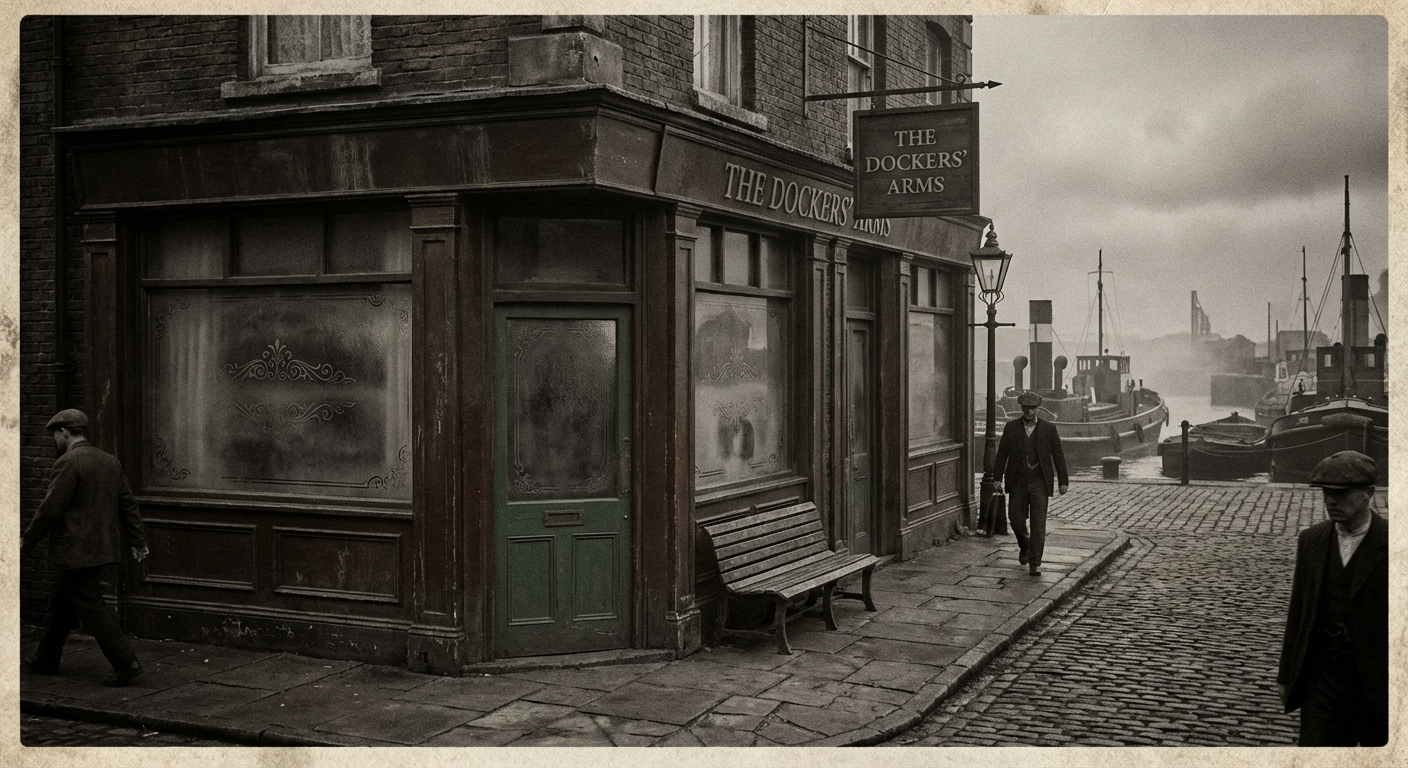
The Greystone Arms has been a pub since 1881. It has survived two wars, a dockers’ strike, the closure of the grain terminal in 1974, and the evening in March 2019 when a burst water main flooded the cellar and Walter Trent was found at midnight bailing out the public bar with a saucepan and a vocabulary that his regulars describe, with admiration, as comprehensive.
It may not survive retirement.
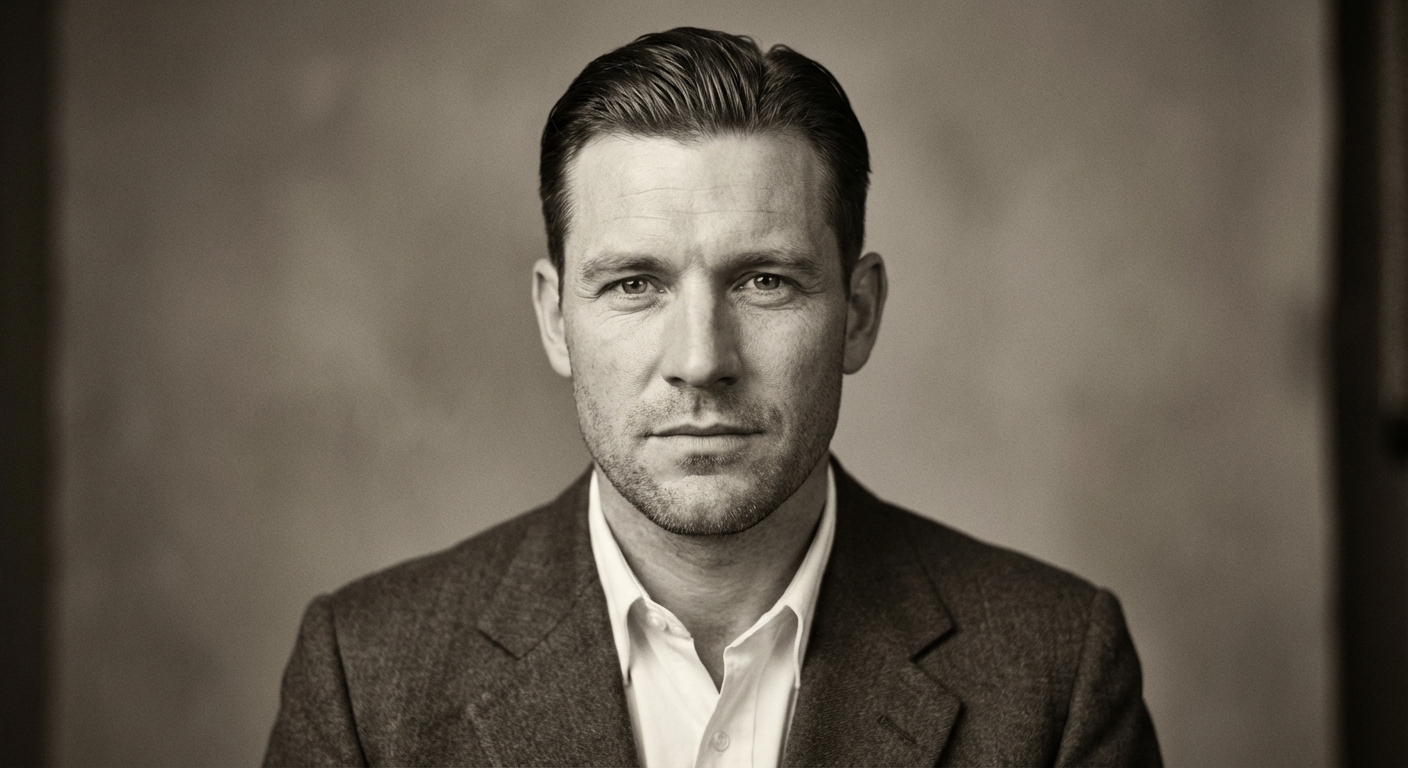
Trent, sixty-two, announced on Thursday that he will step down as publican on 30 April and that the building — which he purchased freehold in 1998 for 38,000 florins — is for sale. He gave no reason beyond the obvious: twenty-eight years is a long time to stand behind a bar, and his knees have been telling him so for the past five.
“I’ve loved every day of it,” he said, polishing a glass in the manner of a man who has polished approximately 300,000 glasses and no longer notices he is doing it. “Well. Most days. Not the water main. But the rest of it, yes.”
The Greystone Arms sits on the corner of Harbourfront Parade and Chandler’s Row, a hundred metres from the river, in the heart of the Docklands. It is a two-storey building of brown brick with etched-glass windows and a wooden sign that has been repainted once every seven years by the same man — Trent’s brother-in-law, Dennis, who has never once got the apostrophe in the right place and has never once been corrected.
It is also the pub where the Fishermen’s Benevolent Association holds its quarterly meetings, where the dockworkers go after shift, where the bar jar collected 340 florins for the Bellvue Theatre repair fund in a fortnight, and where, on the evening of the Rovers cup parade, Trent opened the doors at four in the afternoon and did not close them until three the following morning.
Two expressions of interest have been received. One is from an unnamed local buyer. The other is from Gerald Moss, forty-five, of Moss & Hartley Property, whose Midtown offices overlook Caldecott Square.
Moss’s portfolio includes three former public houses on the south side of the river, all converted to commercial premises within two years of purchase. The Red Lion on Quayside Row is now a letting agency. The Old Anchor on Pilot Street houses a surveyor’s office and a dentist. The Waterman’s Rest on Lower Harbourfront has been subdivided into four retail units, one of which is currently vacant.
“We see potential in the location,” Moss said, when contacted by this newspaper. “Harbourfront Parade is an improving area. The property is structurally sound and well-positioned.”
Patrick Seldon, of the Docklands Workers’ Association, was less enthused.
“Another pub becomes an office,” Seldon said. “And then people wonder why the Docklands has no community. You can’t build community in a dentist’s waiting room.”
The Greystone Arms employs two bar staff and a part-time kitchen worker. Trent has not set an asking price publicly. He said he hopes the building remains a pub, but acknowledged that hope is not a covenant.
“I can’t tell the next owner what to do with it,” he said. “I can tell them what it is. It’s a pub. It’s been a pub for a hundred and forty-five years. The bar is original. The dartboard is from 1923. The fireplace works. People come here.”
He paused. “People still come here.”
Reg Garside, the retired harbour pilot who sits on the bench outside the Greystone Arms every morning and has done so since 2009, learned of the sale on Friday.
“That’s a shame,” he said. “But Walter’s earned his rest.”
He was asked whether he would continue to sit on the bench if the building changed.
“The bench,” Garside said, “is a public bench.”