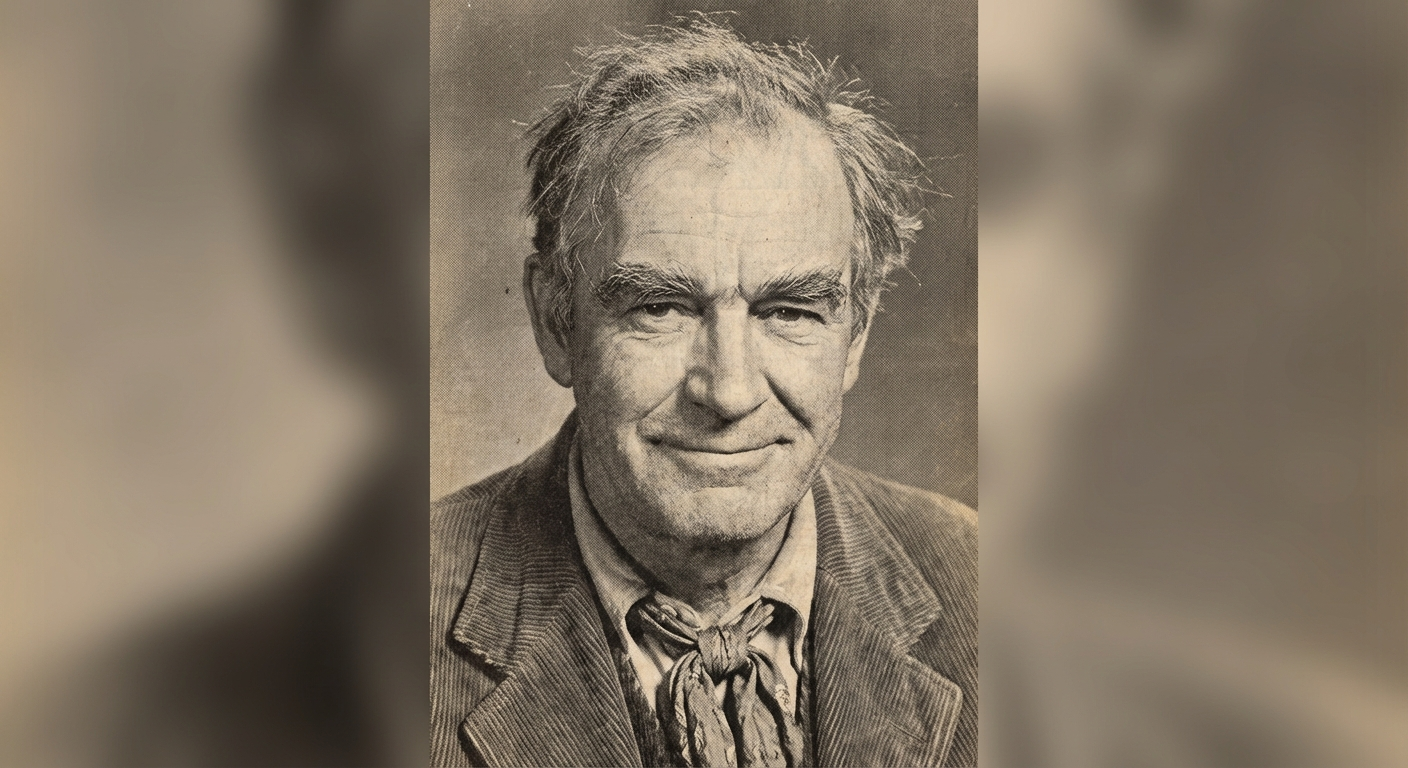
On Wednesday, Dorothea Kinnear stood before the Copper Review Commission and spoke about fatigue life.
She was referring to aluminium — specifically, to the tendency of aluminium conductors to work-harden under repeated vibration until, after thirty years or so, they fail. It is a metallurgical fact, not a metaphor. Kinnear is not a woman who trades in metaphor. She trades in tolerances and load-bearing capacities and the specific tensile strength of copper wire at various temperatures, and if she tells you something will last sixty years, you may set your calendar by it.
And yet.
There is a language that engineers and geologists use which, for all its precision, arrives at the same truths the poets do. Kinnear speaks of fatigue life — the number of cycles a material can endure before it cracks. Whitstone speaks of ore grade declining at depth — the easy copper thinning out, the good stuff buried deeper, requiring more effort and more money to reach. Both are describing what anyone who has ever repaired a house or maintained a friendship already knows: that the surface is not the substance, and what endures is not always what is visible.
Somewhere under the Docklands, a river runs that no one bothered to map.
Pella Strand, the municipal surveyor, found it three weeks ago — a brick-lined channel carrying clean water beneath streets that have been walked for three centuries. On Wednesday, she found markings on the walls. A date: 1782. A mason’s mark. Someone built this tunnel before the city had a drainage system, before it had gas lighting, before it had a newspaper to report such things. And then the city built on top of it and forgot.
Louisa Marchbank, rummaging through the archives of the Historical Preservation Society, found a single reference in a Harbourmaster’s journal from 1793: “the lower conduit which serves the dock warehouses with fresh water.” A sentence. Eleven years after someone carved their name into the brickwork, the city’s official record of their work amounted to a subordinate clause in a maintenance log.
This is what we do with infrastructure. We use it until it is invisible, and then we are astonished when it fails.
I walked behind Albie Finch on Wednesday morning, at a respectful distance.
He was on his round — the second-to-last, as it happens, before he retires on Friday after thirty-three years on Docklands Round 14. His replacement, a young woman named Maisie Hollander, walked beside him with a notebook, writing down the things that no route guide contains: which gates stick, which dogs bite, which elderly residents live alone and appreciate a word through the letterbox.
There is a kind of infrastructure that exists only in memory. Finch knows every crack in every pavement on his round. He knows which alley saves four minutes and which doorbell hasn’t worked since 2014. He knows the name of the one-eared cat at Harrowgate Pier and the particular preferences of every shopkeeper between Chandler’s Row and the fish market. None of this is written down anywhere. None of it appears on any map. When Finch retires on Friday, an entire atlas of invisible knowledge walks out the door with him.
Hollander is young and capable and appears to possess the kind of quiet competence that will serve her well. She will learn the round. In time, she will build her own invisible atlas. But there will be a gap — a period when the knowledge that Finch accumulated over 10,559 walks is gone and has not yet been replaced — and in that gap, something in the Docklands will be slightly less itself.
Whitstone told the commission that the copper ore at Greymoor is declining at depth. The easy seams are thinning. Below them, there is more — probably a great deal more — but reaching it requires investment, patience, and a willingness to dig deeper than is comfortable.
I do not know what this means for the tramway. I suspect it means what most difficult truths mean: that the cheap solution is not available, and the expensive solution is the only honest one.
But I think about Strand in her tunnel, reading the marks of masons who worked 244 years ago. I think about Finch, walking his round for the second-to-last time, teaching a young woman the things no manual contains. I think about Kinnear, standing before a room of politicians and telling them, with the particular patience of someone who has done the calculations, that you cannot build a cheaper tramway that lasts.
A city is built on things we cannot see. Stone and water and copper and habit and trust. The surface is not the substance. And what lasts — what really lasts — is always buried deeper than we expect.
Fatigue life. Ore grade. The lower conduit.
The language of stone.