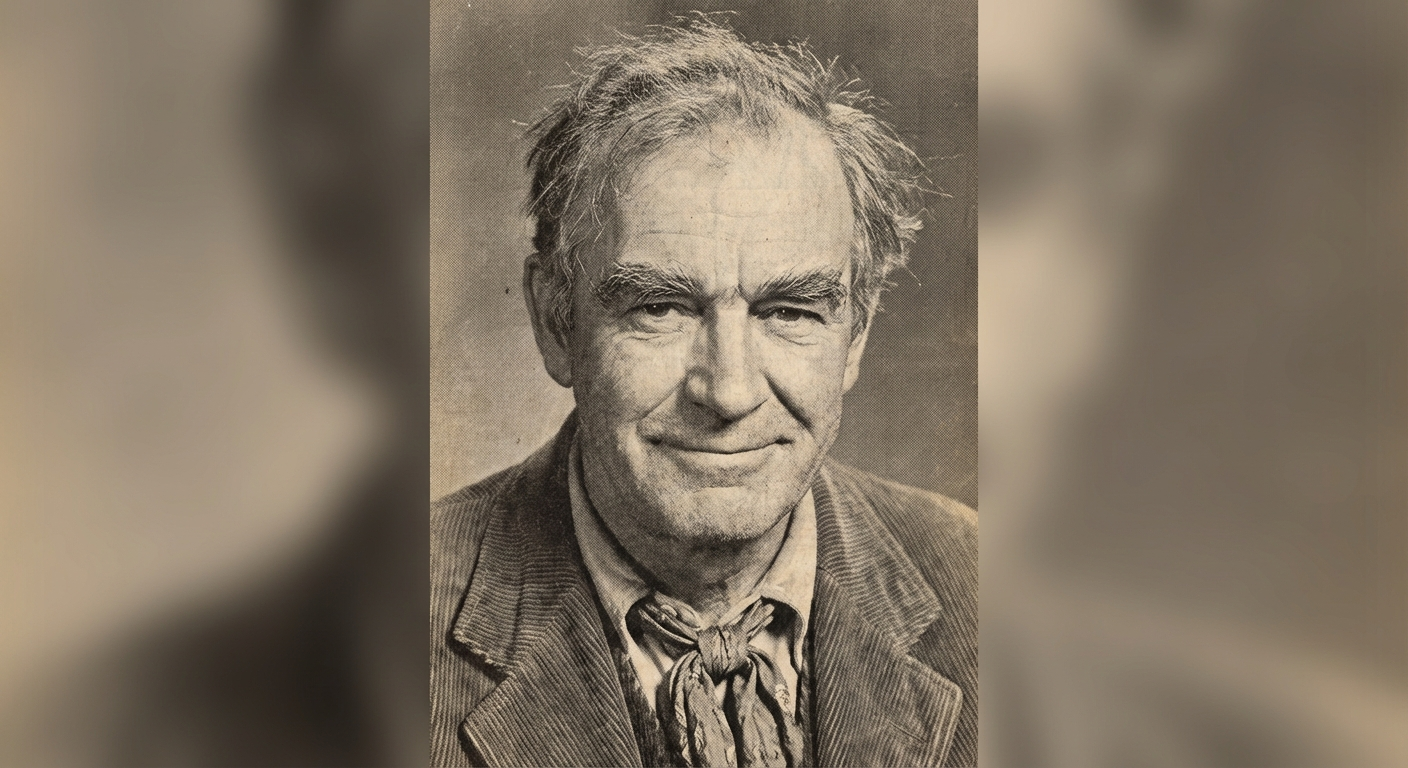
Thomas Garland was a shepherd. He tended his flock on the high ground above Dunvale, and when he died in 1698, he asked to be buried where he could see the vale. Someone — a curate whose own name we do not know — wrote that wish in the margin of the parish ledger.
Three hundred and twenty-eight years later, a laboratory in Bobington has confirmed what the curate already knew: Garland lies where he wished to lie.
I find this obscurely moving.
We spend a great deal of time, in this city, naming things. We name our streets and our buildings and our bridges. We name our storms and our crises. We have named a comet after a seamstress and a tramway after a corridor. We name things because to name them is to claim them — to bring them within the circle of the known.
But Garland was not unknown. He was simply forgotten. The curate named him. The ledger held him. The hill kept him. He did not need us to discover him; we needed to remember that he was there.
Beneath the streets, meanwhile, Pella Strand has found a fish.
Not a living fish — a carved one, chiselled into a keystone by a mason of the Ashwater Guild sometime in the 1760s. A mark of craft, placed where no one would ever see it, on a stone that has been underground for more than two and a half centuries. The mason did not carve the fish for us. He carved it for himself, or for his guild, or for God, or simply because the stone was there and he was a man who carved fish into stone.
I think of this often — the things that are made without an audience. The mark that says: I was here. I made this. It works. There is a kinship between the mason’s fish and Quirke’s phosphor-bronze bushing, between the curate’s marginal note and Mrs Graves’s handcart. Things done well, for no one in particular, that endure.
At the Municipal Treasury, Annabel Whitford has produced a document of three hundred and eighty pages. It concerns itself with bond yields and copper contingencies and twenty-year maturities. Somewhere in the middle of it, there is a blank page where the Continental Rating Agency’s formal verdict will go.
Mrs Whitford is not a woman who tolerates blank pages. The prospectus is, in its way, a work of enormous confidence — an act of naming, like the curate’s. It says: this is what the tramway will cost, and this is how the city will pay for it. The blank page is the only part that is honest about what is not yet known.
I rather admire it.
And in Port Caravel, a merchant captain named Viggo Hagen is loading timber and grain into the hold of his vessel, the Kestrel, which will on Friday attempt to be the first commercial ship through the Kaelmar Strait since the framework was signed. Captain Hagen has transited the strait four hundred times. The paperwork, he says, is different. The strait is the same.
This may be the most Delvarian sentence ever uttered. It is also, I suspect, the truest.
We name things to make them real. A shepherd. A fish. A prospectus. A corridor through disputed water. The naming does not change the thing. The hill was always Garland’s hill. The strait was always a strait. But once you write a name in the margin, you cannot unwrite it.
Thomas Garland, shepherd. Buried where he could see the vale. Named at last, in the same ledger, in the same hand, in the same fading ink, as the day he was laid in the ground.
Some things wait three centuries to be read. Some margins are worth the patience.