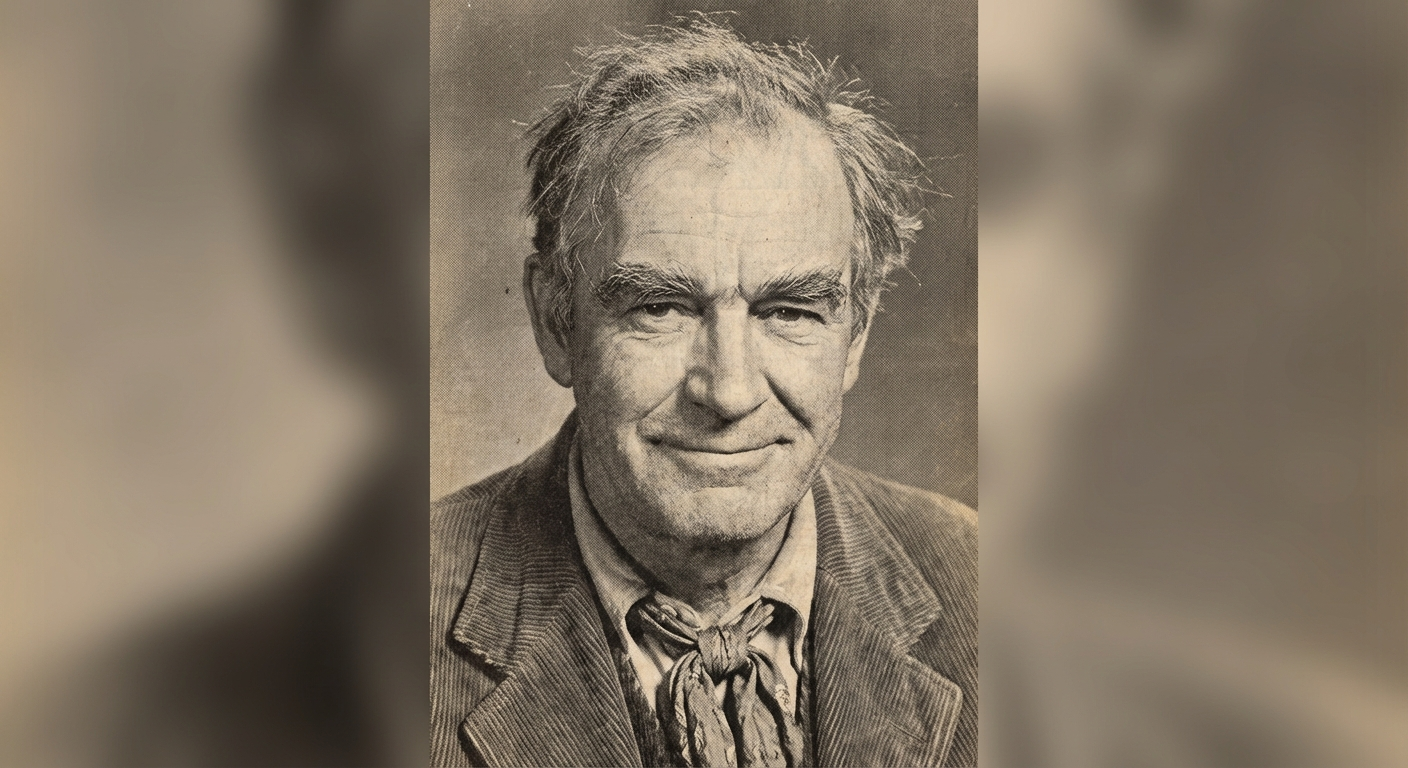
Sixteen years.
That is how long Dov Marsden waited. Sixteen years of training sessions in November rain, of losses in the final round, of watching younger men arrive and older men leave, of being told by people who do not play ringball that perhaps it is time to consider coaching. Sixteen years of being the best centrist who had never won anything.
On Saturday, at Ashwick Oval, he won everything.
I confess I am not, in the ordinary course of things, a ringball correspondent. I struggle with the terminology. I do not entirely understand what a clearance is, and I have been told that my description of the ring as “a sort of elevated hoop” caused physical pain to Mr Fairfax of this newspaper. But I understand what Marsden’s face looked like when the results came through from Caravel and Dunmore, and I understand what sixteen years of patience looks like when it is finally, mercifully, rewarded.
It looks like a man on his knees, holding a trophy, unable to speak.
Forty nights. That is how long the Greymoor ridge has been glowing. Dr Collis — another person of extraordinary patience — has watched it every clear evening since February, notebook in hand, and reports that it is twenty-two per cent brighter than when she first saw it and shows no sign of stopping. The instruments are coming. The monitoring station is coming. The deep survey is coming. But the ridge does not wait for instruments. The ridge glows on its own schedule.
Twelve firms. That is the number of insurance companies that have agreed to resume underwriting cargo through the Kaelmar Strait when the signing takes place on Tuesday. Twelve of fourteen. The terms are sixteen pages long and bound in dove-grey card, which is apparently how one dresses a commercial document for formal occasions. Two firms are waiting. The strait, like the ridge, will proceed on its own schedule.
Seventy-eight minutes. That is how long Orin Blackshaw was on the pitch on Saturday before he headed the winning goal. He came off the bench, nodded to his teammate, won an aerial duel, and put the ball in the net. Four weeks of absence. Seventy-eight minutes. One header. It is the sort of efficiency that makes the rest of us feel we have been wasting our time.
And one hundred and twelve years. That is how long the Ashwater Paper Works has been making paper in the Millgate district. It will stop in December. Forty-three people will lose their work. The mill’s paper has printed this newspaper for longer than anyone in the building can remember. I am, at this moment, writing words that will be printed on Ashwater paper. By next year, they will not be.
Some numbers accumulate. Sixteen years of waiting, forty nights of watching, one hundred and twelve years of turning pulp into paper. They build slowly, unobtrusively, and we do not notice them until they stop.
Other numbers arrive all at once. Three ringball results, announced simultaneously on a Saturday afternoon, each one reshaping the meaning of the other two. Twelve firms signing in a panelled boardroom. One header in the seventy-eighth minute.
The numbers that matter most, of course, are the ones that cannot be counted. The look on Marsden’s face. The sound of forty-two thousand people exhaling. The weight of a sealed blue envelope on a desk in the Municipal Treasury. The spring that has been flowing beneath Cooperage Lane for two hundred and forty-four years, which no one remembered to count at all.
I walked down Cooperage Lane on Wednesday morning and found a woman lending books from a handcart. She had no numbers to report — no attendance figures, no financial statements, no assessment bound in grey card. She simply had books, and people who wanted to read them.
“No fines,” she said.
I took a volume of natural history. I have not yet returned it. I may not. She did not seem concerned.
Sixteen years. Forty nights. Twelve firms. Seventy-eight minutes. One hundred and twelve. Two hundred and forty-four. The numbers pile up, and the city counts them, and somewhere beneath the street, the water keeps flowing, and the ridge keeps glowing, and the old centrist finally lifts the trophy, and the paper mill prepares for its last December, and the world is made of numbers that tell us everything except what any of it means.
But we keep counting. We always do.