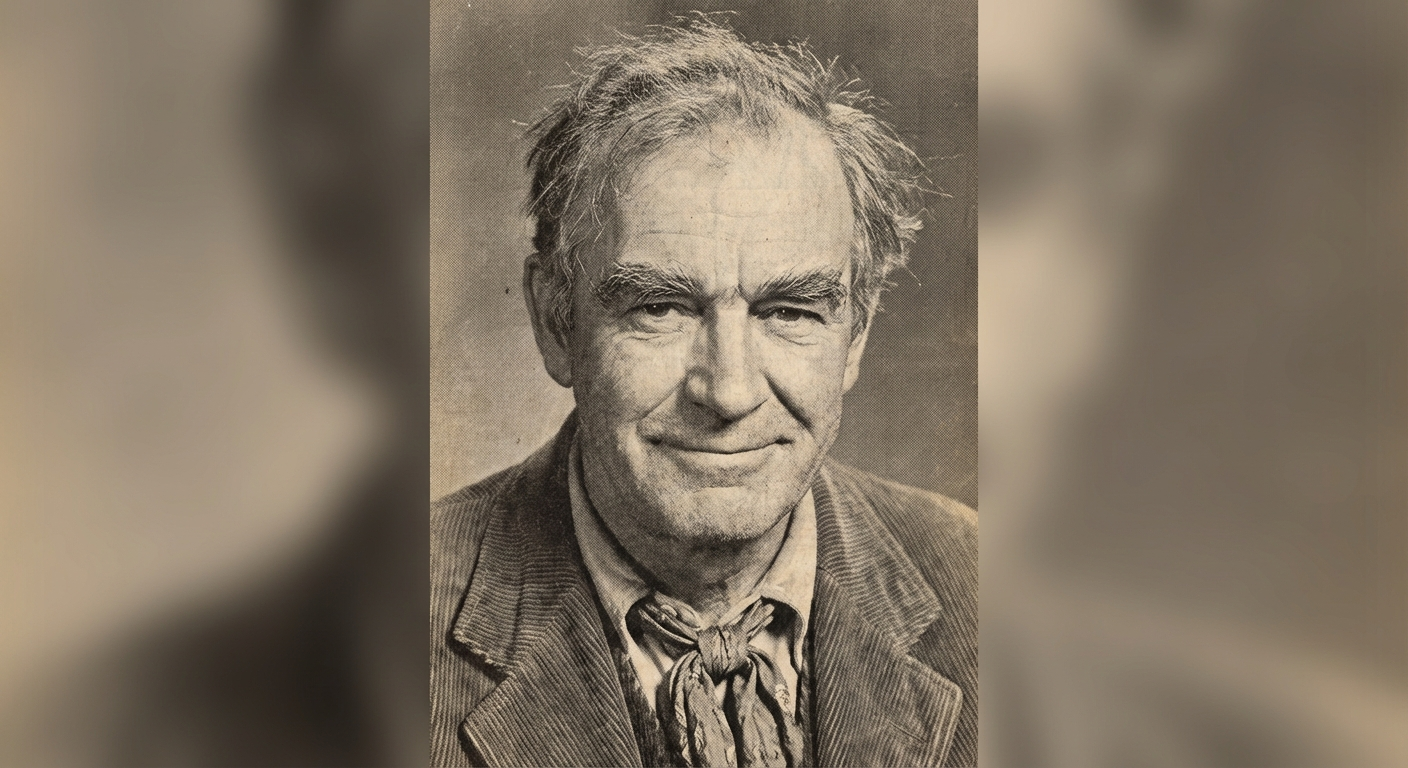
Edmund Vale fought the City Council in 1843 to extend gas lighting to the working-class districts. The council said it was too expensive. Vale said he would rather resign than explain to a child why her street was dark when the street next to it had light. He did not resign. The lights went on.
On Saturday evening, in a theatre named for no one in particular on a street between Midtown and Upper Fernwich, an actor named Thomas Ashworth played Edmund Vale in front of three hundred and seventy-eight people who had each paid forty florins to keep a building standing. He played the scene in which Vale addresses the council, and he played it so well that a woman in the third row forgot she was holding a glass of wine and set it on the floor.
I know this because I was sitting behind her, and I picked it up.
Ruben Glass gave twenty thousand florins. This is generous by any calculation, but it is not the thing I will remember about Saturday night. The thing I will remember is the twelve minutes before the money, when Glass stood on the stage of a theatre he had not entered in fourteen years and spoke about a creaky step and a cup of tea and an old woman named Constance who gave him a script and told him to read page three.
He was not performing. He was remembering. There is a difference, and the audience knew it.
In the Greymoor Highlands on Saturday morning, Bess Holloway laid white chrysanthemums at a sealed mine entrance. She has done this every year for sixty-three years. Her son drove her. He read forty-one names from a card he keeps in his wallet. Behind them, the scaffolding for a memorial that Parliament approved and a sculptor in Port Caravel is building.
Arthur Holloway died at six-ten in the morning on a Saturday in March. His wife has outlived him by more than the length of his entire life. She will come back for the dedication.
“I can manage one more,” she said.
Desmond Quirke returns to the Municipal Chamber clock tomorrow. He is seventy-nine. He will bring a watchmaker’s lathe, precision reamers, and a phosphor-bronze bushing from stock left over from his last visit in 2003. The clock has been silent since Wednesday. He believes two days will set it right.
A brass bushing installed in 1873 has finally worn through after approximately four point seven billion rotations. I do not know what it means that I find this comforting — the idea that something can turn four point seven billion times before it needs attention. Most things I own break considerably sooner.
At Ashwick Oval, Dov Marsden fell to his knees when the final whistle blew, and a young man named Barlow pulled him up. At Bridgewater Stadium, Marcus Harte scored his first league goal and smiled as though he had been saving it. In the harbour, the Stellara tied up at Berth 7 with enough velveroot to last the city through May.
The spice crisis is over, though nobody held a ceremony. Crises end the way they end — not with declarations but with crates on a quayside and a merchant who says, quietly, “We managed.”
Edmund Vale won his argument. The lights went on in the working-class districts, and the children did not have to walk home in the dark. The Bellvue Theatre needs nine thousand more florins, and it will find them, because this is a city that has decided — not unanimously, not without argument, and not without considerable grumbling — to keep its old things.
Its clocks. Its theatres. Its chrysanthemums. Its rivers that run underground where no one can see them.
The lights come on.