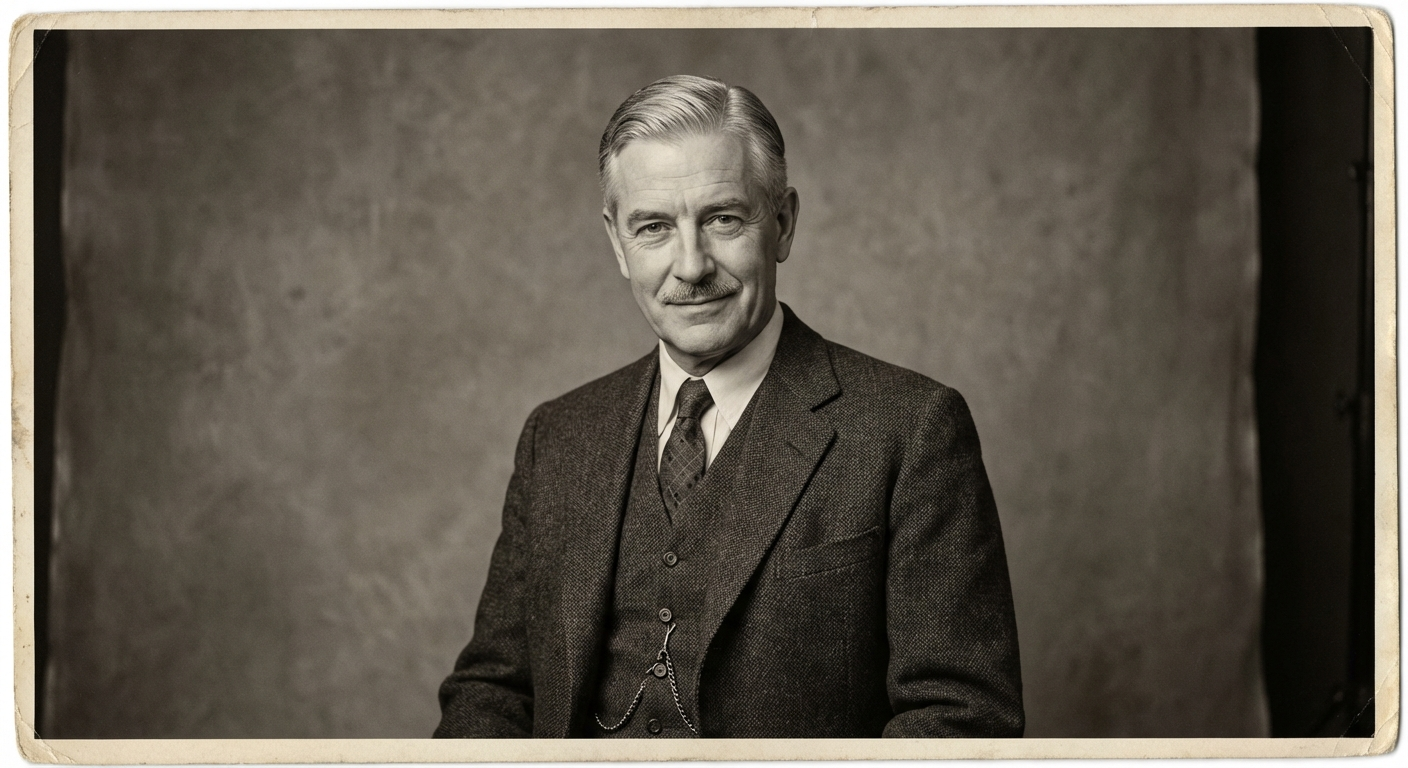
There is a particular kind of irony that only commerce can produce: the moment when the eccentric becomes the visionary, not because he changed, but because the world moved toward him.
Arlo Kessling, twenty-six, opened The Thirty-Mile Table on Threadneedle Street three weeks ago with a proposition that many in the restaurant trade regarded as quaint at best and commercially suicidal at worst. Every ingredient sourced within thirty miles. No imported spices. No eastern aromatics. Eighteen seats, twelve florins per meal, and a philosophy that could be summarised as: cook with what is near.
On Tuesday evening, The Thirty-Mile Table was fully booked for the first time — and for every remaining service this week. A waiting list has formed. Kessling, reached by telephone between services, sounded mildly bewildered.
“I didn’t plan for this,” he said. “I planned for empty chairs and a lot of leftover turnips.”
The Arithmetic of Scarcity
The Eastern Spice Index closed Tuesday at 351 — a new record, surpassing Monday’s 348. The index, a twelve-spice weighted basket tracked by the Bramblegate Exchange since 2003, has now risen 24 per cent in eleven days. Velveroot remains unavailable at any price. Black cardamon has risen 22 per cent. Dried saffron bark, golden peppervine, and smoked coriander seed are all up between 12 and 25 per cent.
For the city’s restaurant trade, the mathematics are stark. Haroun Nazari, the Ashbury Lane spice merchant whose family has supplied Bobington’s kitchens since 1962, confirmed on Tuesday that he has imposed purchasing limits on seven additional varieties, bringing the total to fourteen out of his thirty-two stock lines.
“I have enough smoked coriander for perhaps two weeks at current demand,” Nazari said. “After that, I have prayers.”
The consequences are now visible on menus across the city. The Times surveyed twelve prominent restaurants on Tuesday. Nine have made significant menu changes since the crisis began. Three have eliminated entire courses. One — The Ashen Grill on Threadneedle Street — has replaced its entire eastern-influenced menu with what chef Dominic Hale described, with a wry smile, as “a return to honest Bobington cooking.”
Adaptation and Invention
The most striking responses have come from kitchens willing to innovate rather than simply subtract. Simeon Kade of The Willow Table, who pulled his celebrated braised lamb shoulder a week ago when velveroot ran out, has introduced what he calls a “Greymoor preparation” — lamb braised with rosemary, juniper, and wild thyme foraged from the Ashwater Valley.
“It is not the same dish,” Kade said. “It is a different dish. I have spent twenty years building a menu around flavours from four thousand miles away. Now I am learning what grows in the hedgerow behind Millhaven.”
Marguerite Fontenoy at Verlaine’s, whose eastern-influenced tasting menu has been the city’s most celebrated for the past three years, estimates her spice reserves at approximately two and a half weeks. She has begun reformulating dishes using preserved and fermented ingredients — pickled ramsons, fermented grain mustard, smoked salt — to maintain complexity without imported aromatics.
“A great kitchen is not defined by its ingredients,” Fontenoy said. “It is defined by what it does when the ingredients change.”
The Guild Session
The Merchants’ Guild emergency session on Thursday — the first since the 2011 dockers’ strike — will address three urgent matters: coordinated stockpile management among the city’s spice merchants, an emergency pricing framework to prevent hoarding and profiteering, and a formal petition to the Foreign Office requesting that the spice trade be included as a priority in the Kaelmar diplomatic negotiations.
Guildmaster Hadrian Voss, who testified at the Copper Review Commission on Tuesday morning, told the Times that the petition had gathered signatures from forty-seven Guild members in two days.
“Copper gets the headlines because of the tramway,” Voss said. “But the spice trade employs 1,200 people in this city directly, and ten times that many indirectly. Every restaurant, every baker, every household that seasons its food is touched by this.”
The Accidental Visionary
Back on Threadneedle Street, Kessling’s accidental success has drawn attention he neither sought nor, it seems, particularly enjoys. He declined a request to be photographed and said he had no interest in expanding.
“Eighteen seats is the right number,” he said. “I can cook for eighteen people with what Pennock sends me on Tuesday morning and what Greta brings from the valley on Thursday. If I cook for thirty-six, I need supply chains. Supply chains are what got everyone into this mess.”
Greta Solvay, the beekeeper and herbalist who supplies The Thirty-Mile Table with its herbs, confirmed that Kessling had placed no additional orders. “He takes what I bring,” she said. “If the rosemary is good, we have rosemary. If the sage is better, we have sage. It is not complicated.”
There is, of course, a risk that this narrative flatters the exception at the expense of the rule. Not every restaurant can source within thirty miles. Not every kitchen can reinvent itself in a fortnight. The spice crisis is, for most of the trade, not an opportunity for philosophical renewal but a slow-motion emergency that threatens livelihoods.
But the crisis has, at minimum, forced a conversation that the restaurant trade had not previously thought necessary: what does Bobington taste like when it can only taste like itself?
The answer, for the moment, is still being cooked.