
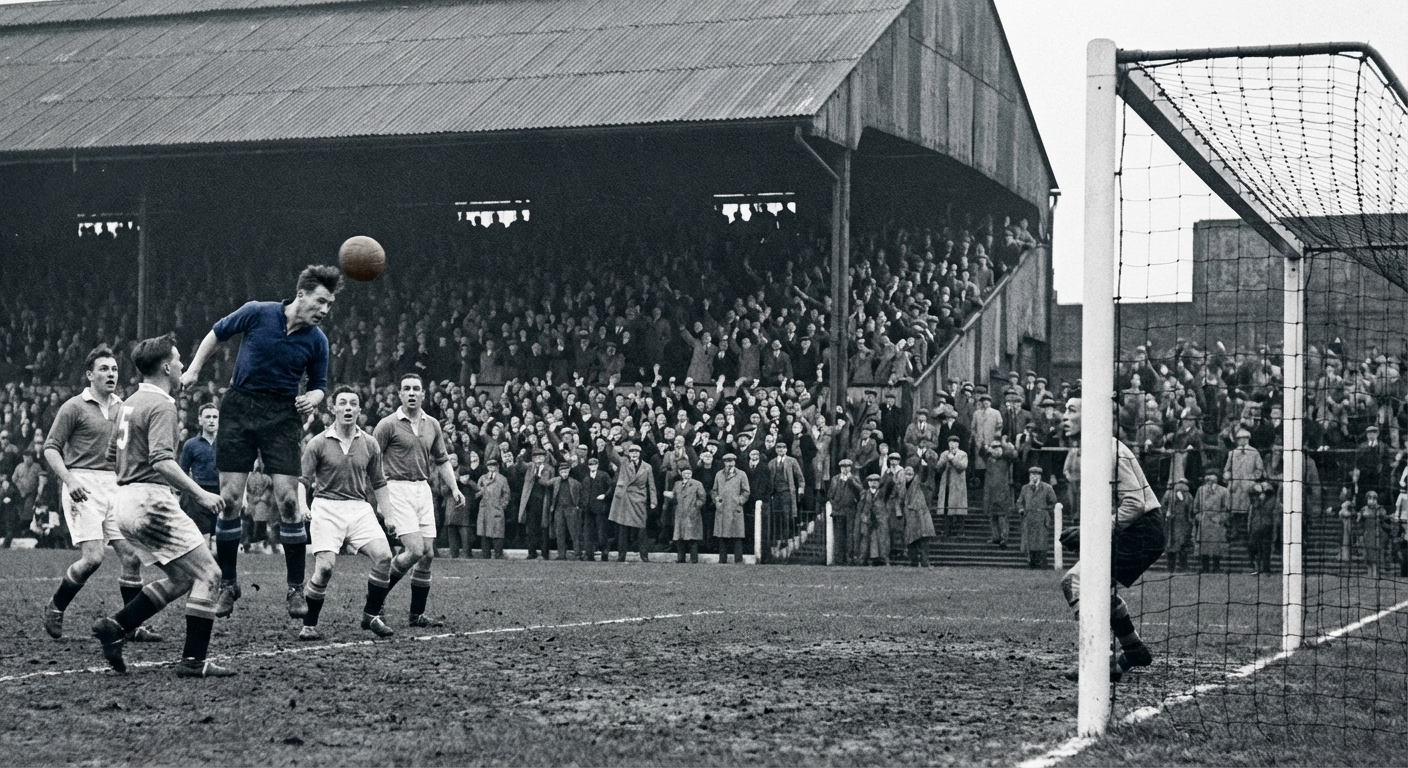
There is a particular cruelty to repetition in sport. To lose the same way, to the same man, at the same ground, by the same method — that is not defeat. That is a haunting.
Bobington Rovers beat Ironhall United 2-1 at The Foundry on Saturday afternoon, and if you had been watching with one eye closed and the other bleary, you might have mistaken it for the Merchants’ Cup final six weeks ago. Brennan Cole headed the opener. Kael Dunmore swung a corner. Orin Blackshaw met it with his forehead. The net moved. The away end — some 3,200 Rovers supporters in a ground of 26,400 — produced a noise that rattled the iron roof beams of the old West Stand.
Cole had given Ironhall the lead on seventeen minutes, glancing a free kick past Sully Marsh at the near post. It was his thirteenth league goal of the season, and it was almost insolently casual. The Foundry, compact and loud and unforgiving, roared its approval. Ironhall have been seventh all month, comfortable and competent and entirely unbothered by the business end of the season. They could afford to enjoy a cup rematch. They had nothing at stake but pride.
Rovers, who have everything and nothing at stake — safe at fourteenth, too high for fear, too low for ambition — simply went about their work.
The first half was tight and often scrappy. Theo Harwick won seven aerial duels before the interval. Dunmore drifted between positions with the maddening fluidity that makes him impossible to mark and occasionally impossible to find. Osei, stationed on the right, was quiet in the way that a cat on a windowsill is quiet: motionless, watchful, coiled.
Blackshaw, starting his second consecutive match since returning from the knee injury that cost him two months, looked composed. He won his headers. He tracked Cole. He did the thousand small things that defenders do when they are fit and thinking clearly and not compensating for something that hurts.
Then, on fifty-two minutes, Dunmore won a corner on the left. He placed the ball, looked up once, and swung it with the inside of his right boot toward the penalty spot.
Blackshaw had begun his run from the edge of the area. Magnus Stahl, Ironhall’s goalkeeper, had positioned himself centrally. The Ironhall centre-backs — both of whom had watched the cup final from this exact vantage — were somehow not close enough. Blackshaw met the ball at the highest point of its arc, at full stretch, and directed it firmly inside the far post.
It was the same corner. The same delivery. The same run. The same result.
The away end erupted. Blackshaw slid on his knees toward the corner flag, his teammates arriving in a pile. Dunmore, who had delivered the ball, stood at the corner with his hands on his hips and a grin that bordered on impolite.
“I put it in the same place,” Dunmore said afterwards. “Orin knows where it’s going. So do they. And it doesn’t matter.”
Ironhall pressed for twenty minutes. Cole forced a good save from Marsh. The midfield battle became ragged and physical. Then, on seventy-one minutes, Harwick intercepted a wayward pass in his own half and played a long diagonal toward Osei, who had drifted into the right channel. Two touches. A look at goal. A low, firm finish inside Stahl’s near post.
Two-one. Game over.
“We’re pleased,” said Phillipa Corbett, in her customary fashion. “We came here, we competed, we won. That’s four in five now. The players deserve that.”
It is indeed four wins in the last five league matches. Rovers have forty-two points from thirty-one games. They are fourteenth, safe, comfortable, and — quietly, without anyone quite saying it aloud — playing the best football of their season at the precise moment it matters least in the table.
Blackshaw was asked whether he thought about the cup final when the corner came in.
“No,” he said. “I thought about where the ball was going to be. The ball doesn’t know what month it is.”
Stahl, who was beaten the same way in February and again on Saturday, was not available for comment. Cole, generous as ever, offered a handshake and a word to Blackshaw in the tunnel. The Ironhall supporters, who had booed the Rovers team bus on arrival and applauded them at the final whistle, filed out in that particular silence that comes from watching something you have seen before and hoped not to see again.
Rovers travel next on a date yet to be confirmed. But they leave The Foundry with forty-two points, a fit captain, and a set piece that nobody seems able to defend.
The same corner. The same man. The same net.
Some things in football are not tactics. They are fate.