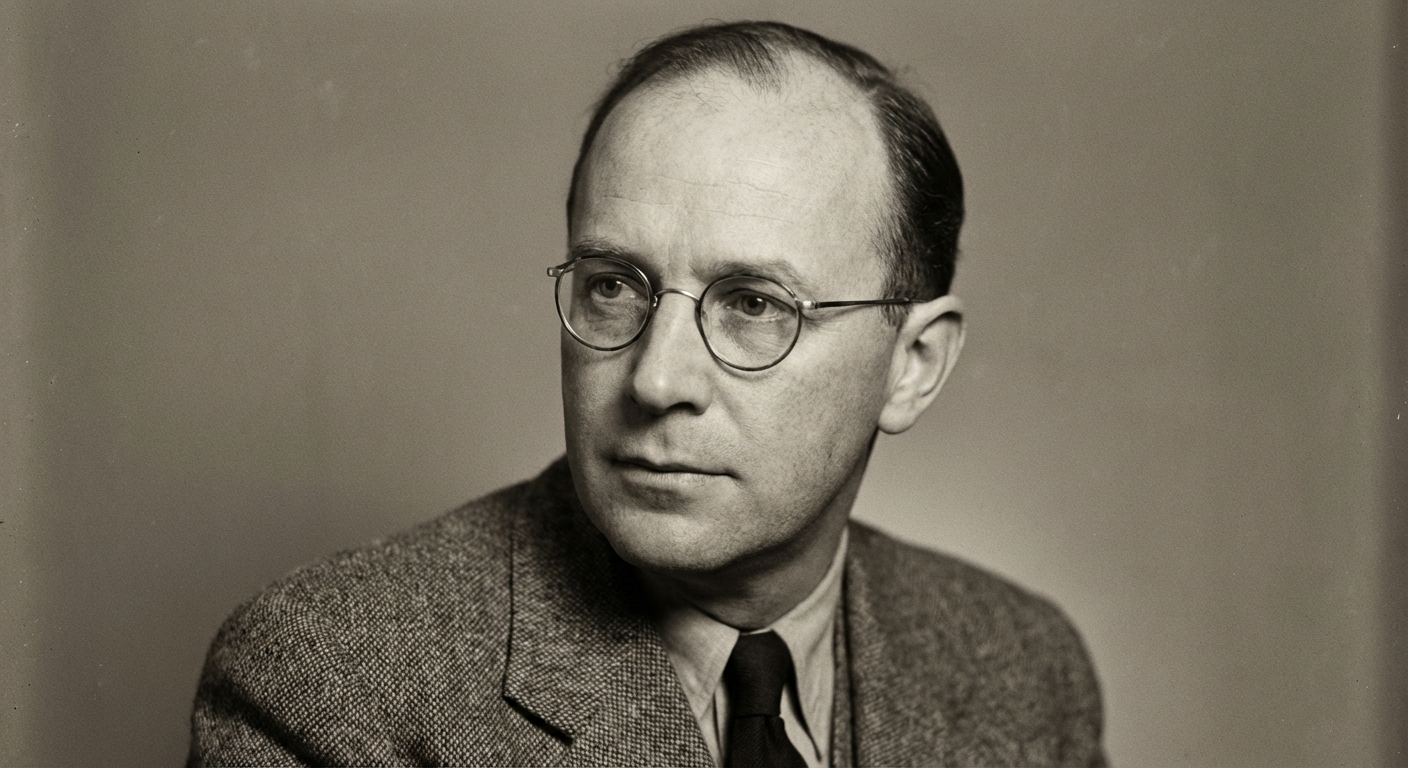
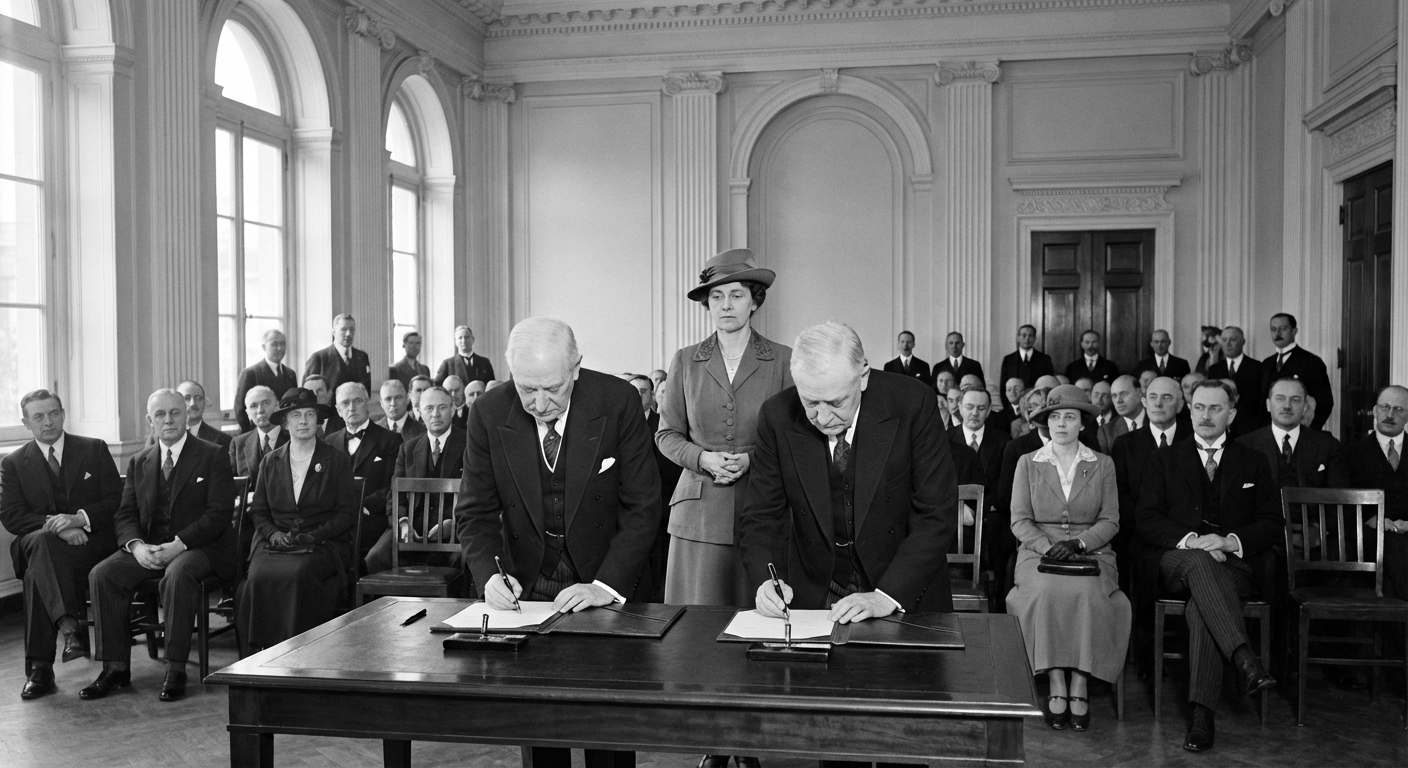
They entered together.
At 10:58 on Tuesday morning, the double doors of the Meridian Room opened and Sir Duncan Hale and Count Viktor Soren walked in side by side — the third consecutive session in which the two men used the same entrance, and the gesture that will endure in memory long after the legal language has been absorbed by maritime lawyers.
Undersecretary Helena Marchetti, who has presided over every session since the quiet channel opened five weeks ago, stood at the head of the long mahogany table. To her left, Henrik Dahl, the Ashford Republic’s senior trade attaché, occupied the observer’s chair. Consul Elara Miren sat along the eastern wall with two members of the Thessarine delegation. Consul Pehr Lindqvist, whose unannounced visit to this building on a Friday afternoon in February set the entire process in motion, was seated opposite.
There were approximately forty people in the room. The press contingent — limited to six accredited correspondents, including this reporter — occupied chairs along the south-facing windows. The morning light fell across the table in long, clean lines.
Marchetti spoke first. She read the preamble of the Transit Corridor Framework in its entirety — four paragraphs affirming the rights of commercial navigation in the Kaelmar Strait, the sovereignty of both riparian powers, and the principle of bilateral resolution through discreet diplomatic engagement. She did not rush.
Then the signing.
Soren, as the visiting envoy, signed first. He used his own pen — a heavy silver instrument that his staff later confirmed had belonged to his father, Admiral Pehr Soren, who negotiated the naval provisions of the Treaty of Ashen Bluffs in 1987. His signature was careful, deliberate, and occupied precisely the space allotted.
Hale signed second, in the quick, practical hand of a man who has initialled documents on four continents. He paused for a moment before lifting the pen, looked briefly at Soren, and then wrote.
The Framework was signed in duplicate at 11:14 AM.
Dahl then signed the observer’s protocol, formally establishing the Ashford Republic’s seat on the Joint Maritime Inspection Commission. He did so without ceremony, as befits a man whose nation has been careful throughout to position itself as a facilitator rather than a party.
At 12:15 PM, Marchetti read the joint statement from the Foreign Office steps. It was the shortest statement of the process — forty-one words:
“The Transit Corridor Framework has been signed by both parties and witnessed by the Ashford Republic. The instruments are now in force. The Kaelmar Strait is open to commercial navigation under the terms of the Framework, effective immediately.”
A crowd of perhaps two hundred had gathered on Chancery Row. They did not cheer. There was applause — steady, respectful, and sustained for approximately one minute. Several people removed their hats.
Hale and Soren walked out together onto the steps. They did not speak to the press. They stood for a moment, side by side, and then Soren turned and offered Hale his hand. The handshake lasted three seconds. A photographer’s flash went off. Then they went back inside.
The Transit Corridor Framework establishes four pillars for the resumption of commercial traffic through the northern channel of the Kaelmar Strait. A designated transit corridor with routing and speed restrictions. A Joint Maritime Inspection Commission — three Delvarian, three Thessarine, one Ashford Republic observer — to oversee vessel manifests and conduct random inspections. An insurance framework with premiums capped at 140 per cent of pre-crisis rates during a three-month trial. And a review mechanism with a bilateral assessment at six weeks and formal review at ninety days.
The first commercial transits are expected within a fortnight. Vessels must submit manifests forty-eight hours in advance to the Commission’s secretariat, which will be established in Fenmouth.
Copper closed Tuesday at 741 florins per tonne — the nineteenth consecutive decline and the lowest price since mid-January. The Eastern Spice Index fell to 268, its lowest level since before the crisis. Clement Varga, senior commodities analyst at Fernwich Trading House, called the market reaction “orderly and inevitable. The strait was priced open before the ink dried.”
The Kharstad Gazette ran the signing on its front page — the first time the negotiations have received front-page treatment in the Delvarian state newspaper. The account was brief, dry, and factual. It did not mention Count Soren by name.
Professor Elias Thornbury, of the Bobington Institute for Foreign Affairs, watched the ceremony from the press gallery. Afterwards, standing on Chancery Row in the thin March sunlight, he offered this assessment:
“There will be those who call this a triumph of diplomacy. It is something better than that. It is a triumph of patience. Five weeks ago, a Delvarian consul requested a private meeting. Today, two nations have agreed on how ships move through water. Every step between those two points was small, deliberate, and bilateral. No grand gestures. No ultimatums. Just two men in a room, finding the shape of an agreement.”
He paused.
“His father’s pen,” he said. “That was the only grand gesture. And it was enough.”