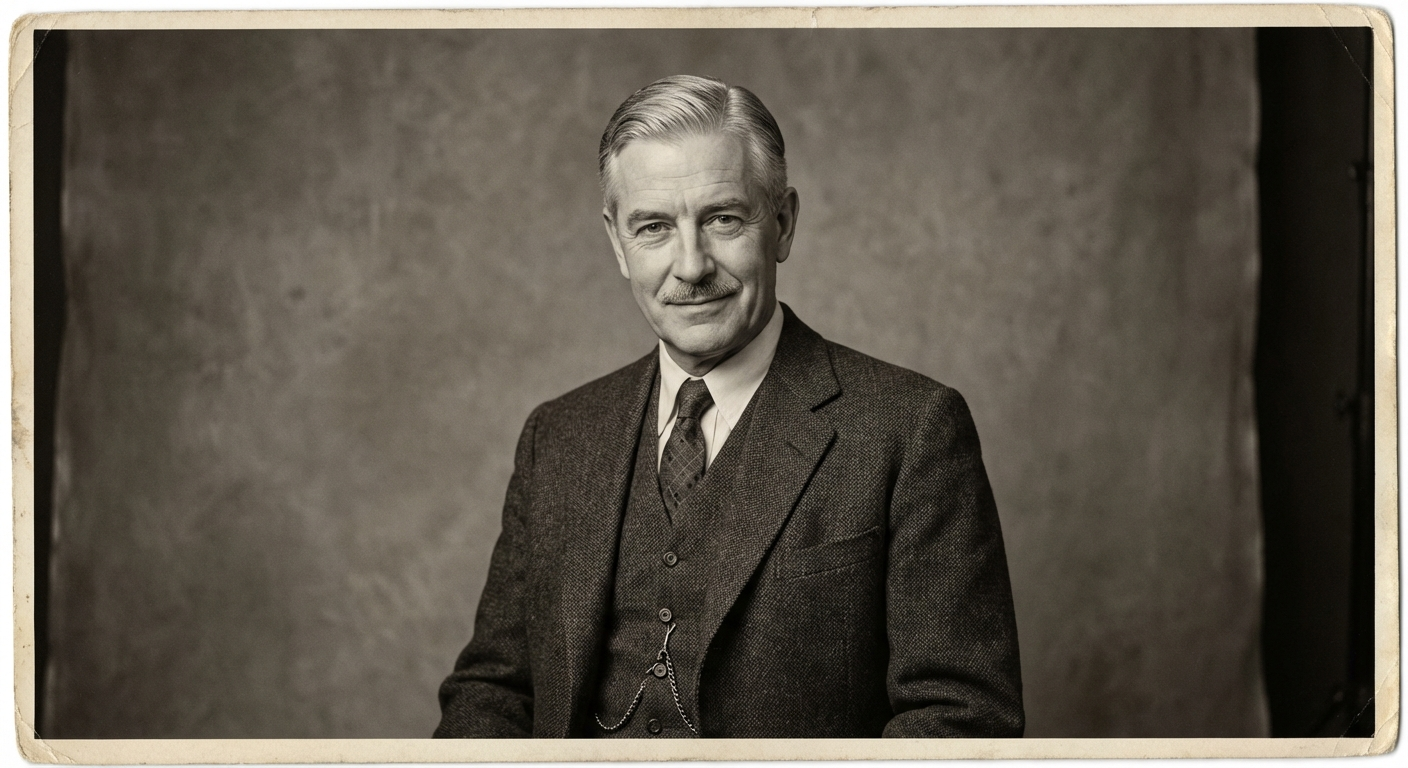
Agnes Hartwell is seventy-one years old. She has owned the Ashwater Paper Works since 1989, when she inherited it from her father, who inherited it from his uncle, who founded it in 1914 with a Scottish bank loan and the conviction that the river above the mill weir was the best fresh water in the lower Ashwater valley for the manufacture of fine writing paper. She has been preparing to close it for nine months, since the morning in July when her foreman Roland Jessup placed an unopened envelope from the Edgeminster Continental Paper Importers’ Association on her desk and said: “Agnes, I am sorry.”
The closure is now eight months away. The forty-three workers are at various stages of transition: fourteen have applied to the Docklands Workers’ Association fund (four electrical fitting, two boatyard apprentices, two textile mill in Edgeminster, six undecided); eleven have indicated they will retire; nine intend to seek work in other paper mills further upriver; and nine are, in Jessup’s careful phrase, “still thinking.”
The two Fourdrinier machines were always going to be the hardest part. They are the heart of the mill. They are also approximately seventy and eighty-nine years old, respectively, and very few institutions in the world possess both the expertise and the floor space to receive them.
The Ashford Republic’s Ministry of Industrial Heritage made the first formal offer in early April. Eighteen thousand florins for the 1937 machine. Transport at the Ministry’s expense. Installation at the National Museum of Industry, in a purpose-built hall in the western district of Linsmere, where the machine would be operated approximately twice a year by retired papermakers as part of the museum’s working demonstrations programme.
The bid was honourable. It was generous, by the standards of a national museum. It would have placed the older machine in a setting where it would be properly understood.
Then Baroness Irina Cassel’s letter arrived.
The letter was hand-written, in violet ink, on heavy cream stock that Hartwell — who is, after all, a papermaker by inheritance — recognised at sight as a Verlaine handmade paper of the early 1990s, almost certainly from the Vienne mill before it closed. The letter offered 28,000 florins for both machines. It promised transport at the foundation’s expense, in two stages, in October and November, after the autumn cargo rates softened. It promised installation in a working machine hall on the foundation’s coastal estate, where the baroness maintains nineteen pieces of nineteenth- and early twentieth-century industrial machinery in operating condition. It promised that both Fourdriniers would be commissioned within twelve months and would produce paper at least once a week thereafter.
It also promised — and this was the line that Hartwell read three times before she set the letter down on her desk — that any apprentice papermakers wishing to train at the foundation’s mill, for periods of three months or more, would be welcomed and paid the foundation’s standard apprenticeship rate.
Roland Jessup was sitting opposite Hartwell when she read it.
“Agnes,” he said, after a long pause. “Two of the lads.”
“I know,” she said. “I know.”
The decision was not difficult, though it was not pleasant. On Wednesday morning, Hartwell wrote to the Ashford Republic Ministry’s senior industrial preservationist — a man named Hugh Stennard, who had visited the mill on 9 April with his deputy and who had spent forty minutes asking questions about the 1937 machine that Jessup said afterwards he had not heard from anyone in twenty years — and explained the situation honestly. The competing offer was higher. It was for both machines. It included, for two of her younger workers, the possibility of paid apprenticeship training in a working facility.
Stennard’s reply came back by return of post, on Friday morning. It was typed, on official Ministry letterhead. It was three paragraphs long. It withdrew the Ministry’s offer. It congratulated the baroness on her acquisition. It said, in its second paragraph, that the Ministry had inspected the machine on 9 April and considered it to be in excellent operating condition for its age, and that the Ministry’s strong preference, on reflection, was that machines of this kind should “continue to make paper, not merely to be looked at.” Stennard expressed the hope that he would be permitted to visit the foundation’s mill once the 1937 was reinstalled.
He added, in a hand-written postscript: “If the apprentices need a reference from the National Museum, please consider this letter to constitute one.”
Hartwell signed the agreement with the Cassel Foundation on Friday afternoon, in the small clerks’ office at the back of the mill, with Jessup as her witness and a Bobington solicitor named Helena Crewe handling the paperwork. The baroness was not present. She is expected to visit Ashwater Paper Works in the third week of May, to inspect the machines in operation and to meet the workforce. Hartwell has been informed that the baroness travels with her own engineer and her own kettle.
The 28,000 florins will be deposited on completion. Hartwell intends to add the proceeds to the workers’ transition fund — increasing the average severance payment by approximately 540 florins per worker — rather than retain it for her own use. She has not announced this publicly. Jessup, who told this newspaper, asked that we mention it anyway.
“She’s like that,” he said. “Always has been.”
The mill continues to operate. Paper is being made. The two Fourdrinier machines, neither of which knows that they have been bought, ran for seventeen hours on Friday and produced approximately 2,300 sheets of fine writing stock for an order placed in November by a stationer’s in the Caldwell Old Town. The order is the last one Hartwell will accept of that size. Smaller jobs are still being booked into August.
The lights at the Ashwater Paper Works will go out on the last day of December 2026.
The machines, by then, will have begun their slow journey south.