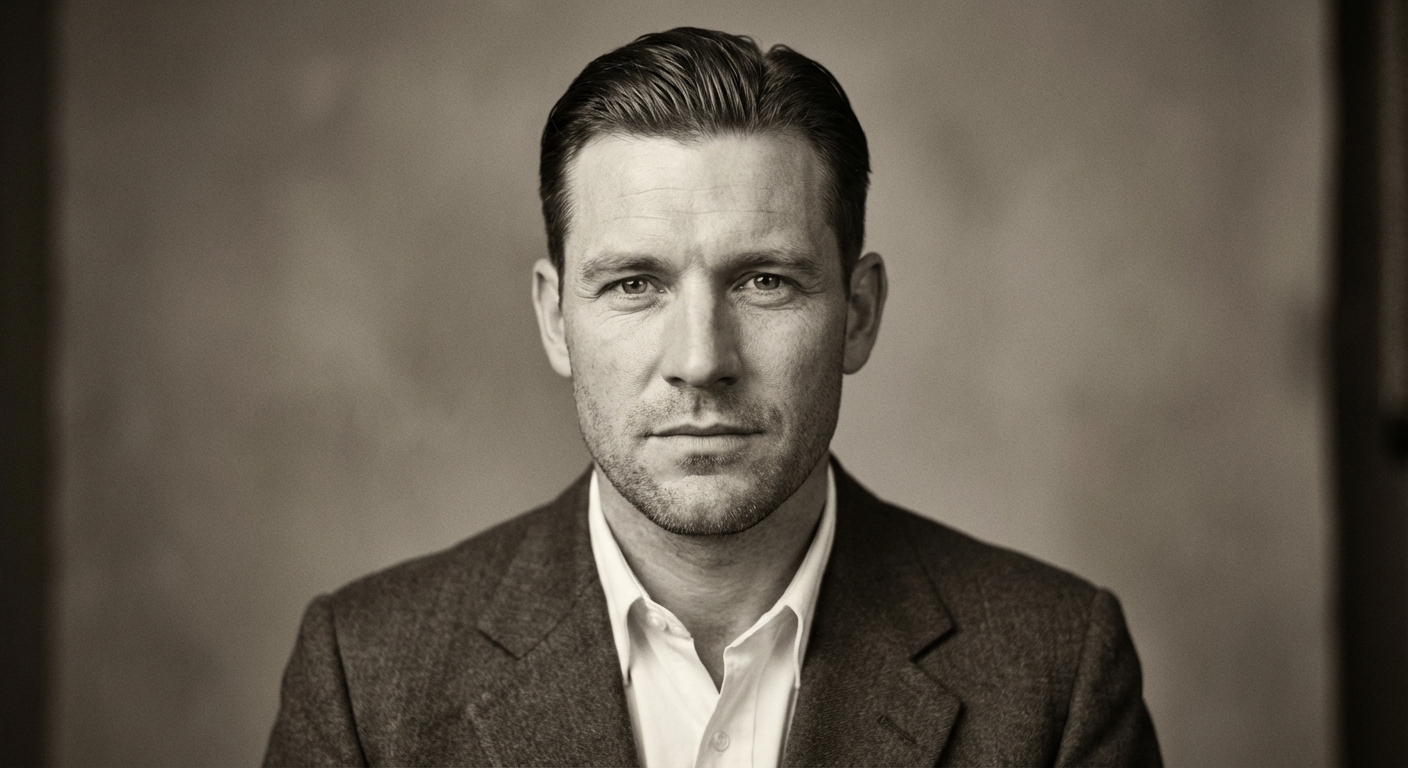
The alarm goes off at ten past five. Alf Burnett is out of bed by quarter past. By twenty to six he is standing on the old pilings beneath the Lower Ashwater footbridge in a pair of swimming trunks older than several of his grandchildren, holding a chamois leather square in his right hand.
He folds the chamois and places it on the third piling from the left. He has placed it on the third piling from the left every morning since August 2004, when he retired from the harbour crane gantry after thirty-one years of lifting things that were heavier than him.
Then he gets in the water.
The swim is always the same. From the pilings to the mudflats below Bramblegate Steps and back. Twelve minutes. No variation. No negotiation. No exceptions — not for weather, not for fog, not for the morning his daughter’s kitchen ceiling fell in, and not, he wishes to make very clear, for seals.
“I was in that water before the seals were,” Burnett said on Friday morning, standing on the embankment in a coat that smelled of river. “Twenty-two years I’ve been swimming that stretch. They’ve been here three weeks.”
The difficulty is this: the mudflats below Bramblegate Steps are now home to ten harbour seals, including a pup born this week — the first seal birth in Bobington waters since 1891. Dr Annalise Fenn-Coulthard, the marine biologist conducting a formal survey of the colony, has asked the dawn swimmers to find a different stretch of river during the survey period.
There are six of them. Burnett is the organiser, though he resists the word. Margaret Frost, seventy-one, a retired district nurse, is the oldest. She has swum with Burnett since 2009.
“Annalise is perfectly right to ask,” Frost said, wrapping a towel around her shoulders. “She’s doing important work. But we’ve been polite about this, and the answer is no. We swim at dawn. The seals haul out at low tide. We coexist.”
Fenn-Coulthard, for her part, has been diplomatic. “I understand the tradition,” she said. “I respect it. But a lactating female with a newborn pup is not an audience for recreational swimming. I have asked for a temporary adjustment. Six weeks. That is all.”
Burnett is unmoved. He is sixty-six years old. He has an arthritic shoulder, a dockworker’s back, and the disposition of a man who has spent three decades operating a crane in all weathers and has long since exhausted his supply of compromise.
“She can survey them from the bank,” he said. “I’m not bothering the seals. I’m fifty metres away when they’re on the mud. They look at me. I look at them. Nobody’s upset.”
Fenn-Coulthard’s survey notes suggest the seals are, in fact, not upset. The colony’s behaviour has not visibly changed since the swimmers began sharing the stretch. The pup continues to nurse. The adults continue to haul out at their preferred times.
“That is not the point,” Fenn-Coulthard said, with the measured patience of a scientist who has spent three weeks counting animals from a cold embankment. “The point is that we do not yet understand the colony’s tolerance. We are establishing a baseline. Any disruption complicates the data.”
The swimmers intend to continue. Fenn-Coulthard intends to continue. The seals, who are not parties to the disagreement, continue to lie on the mud and look at the river with the placid indifference of creatures who have found what they were looking for and see no reason to explain themselves.
Burnett was asked whether he had any message for the Harbour Authority, which is expected to rule on a proposed wildlife protection zone within the week.
“Tell them I’ve been swimming in that river since before half of them were on the Authority,” he said. “And the river was filthy then. I cleaned it up personally.”
He paused. “That’s a joke. But not entirely.”