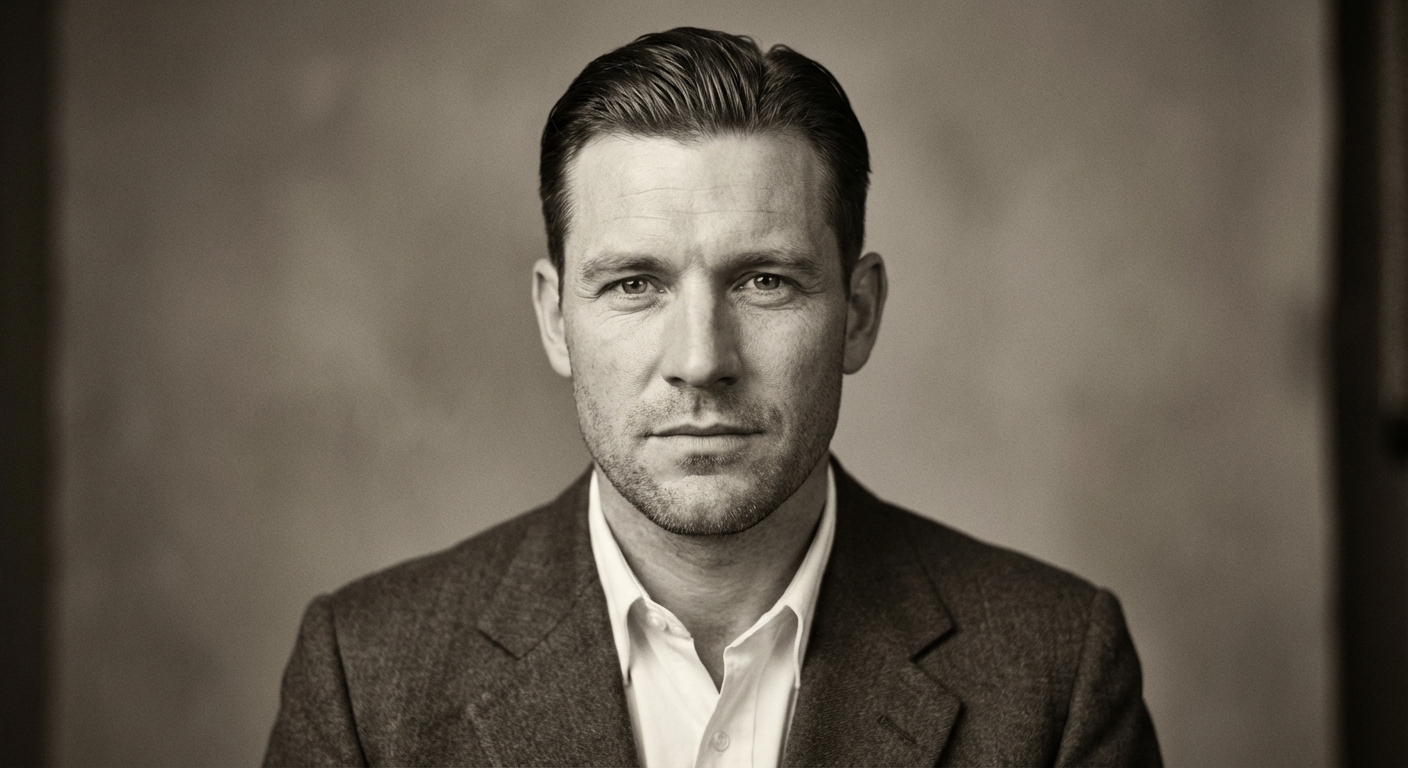
The Reverend Edith Blackwood has been reading the dead for four days, and she believes she has found her man.
In a cramped vestry at St Cuthbert’s Church in Dunvale, surrounded by parish ledgers that go back to 1683, the sixty-two-year-old vicar has been searching for the identity of the human remains discovered on 19 March at the Dunvale mining memorial construction site. Preliminary analysis by Dr Maren Huxley of Bobington Polytechnic dated the skeleton to the late seventeenth or early eighteenth century — an adult male, mid-thirties to early forties, approximately five feet seven inches, buried in an east-west Christian orientation with stone lining and no coffin.
Two entries in the burial records were identified as possible matches: an unnamed traveller recorded in 1703 and one Thomas Garland, shepherd, in 1698.
On Monday, Reverend Blackwood found the annotation that may settle the question.
“It is written in the margin of the 1698 entry,” she said, seated at a table stacked with leather-bound volumes, a magnifying glass at her elbow. “In a different hand from the main register — likely the curate’s, not the rector’s. It reads: ‘Thos. Garland, a shepherd of the high ground, who desired burial where he could see the vale, at the place he called his own.’”
The memorial site, where the remains were discovered approximately twelve metres east of the sealed mine entrance, commands a clear view of the Dunvale valley below. It is precisely the sort of elevated, exposed ground that a hill shepherd might have called his own.
“The 1703 entry is plainer,” Reverend Blackwood continued. “It says only ‘a traveller, name not known, found upon the ridge road.’ There is no marginal note, no elaboration. The 1698 entry tells us something about the man’s life and his wishes. That, to my mind, carries weight.”
Dr Huxley’s bone and soil analysis, which will provide a more precise dating, is expected within the week. If the results are consistent with a burial circa 1698, the identification of the remains as those of Thomas Garland would be, in Huxley’s assessment, “the most plausible conclusion available to us.”
Bess Holloway, the eighty-one-year-old widow of Arthur Holloway, who was killed in the 1963 mining disaster and who campaigned for decades for the memorial now being built on the ridge above, received the news with her customary stillness.
“A shepherd who wanted to be buried where he could see the vale,” she said. “He chose the same hill my Arthur went into. Three hundred years apart, and the hill took them both.”
Construction of the memorial continues around the discovery. Foreman Callum Sayer rerouted the drainage trench on the day the remains were found. Ines Cavallo’s forty-one bronze figures are being cast in Port Caravel. The memorial is expected to be completed by autumn.
Reverend Blackwood has returned to the ledgers. She has twenty-two letters’ worth of parish history still to review, and she is not a woman who leaves a task unfinished.
“The dead have waited three hundred years,” she said. “They can wait while I read properly.”