
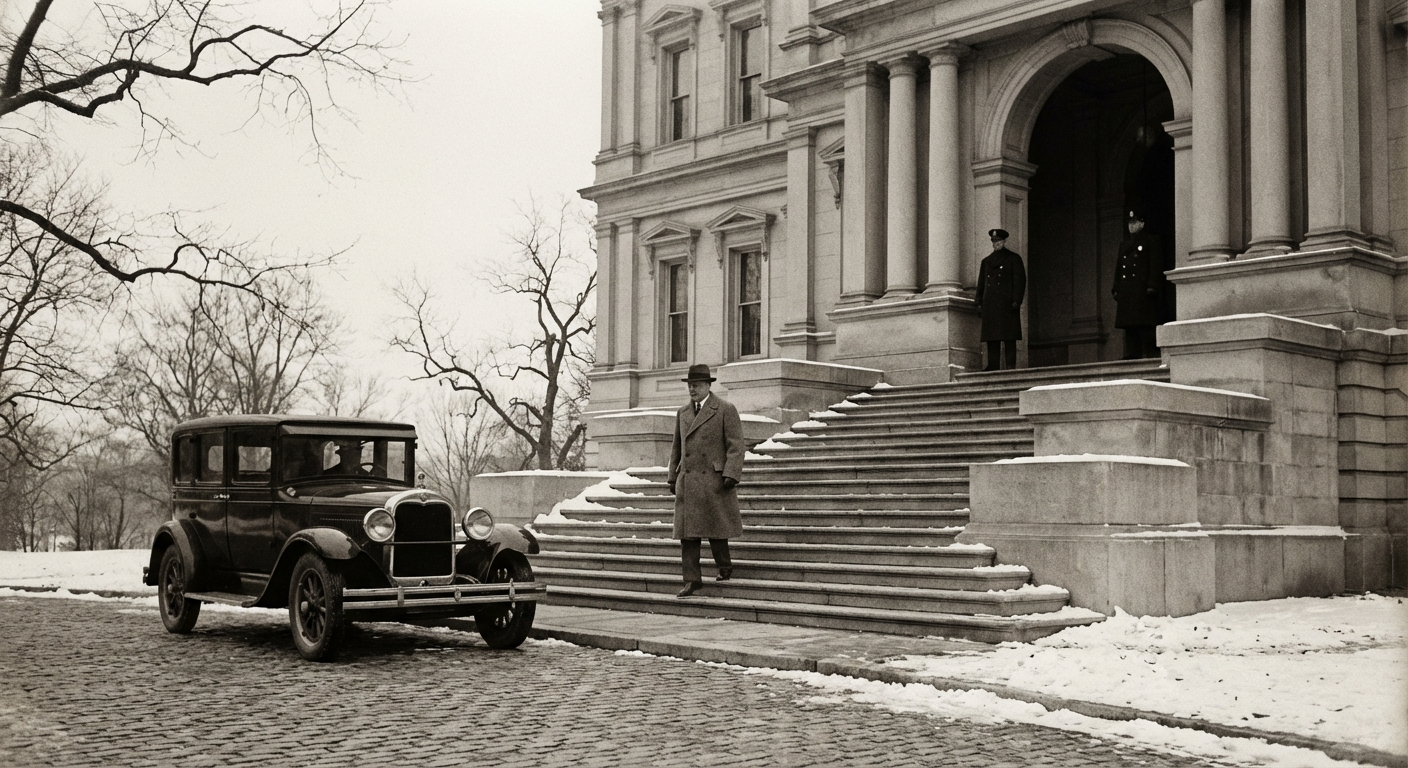
The Thessarine Confederation announced late Saturday that it has recalled Ambassador Evren Soldt from the Delvarian capital of Kharstad, a step that diplomatic observers are calling the gravest escalation in the Kaelmar Strait dispute since the 1987 standoff that nearly brought the two nations to open conflict.
In a statement read by Foreign Secretary Alaric Daine from the steps of the Confederation Hall in Thessara, the island nation accused the Delvarian Empire of “a sustained and provocative military buildup” in waters governed by the Treaty of Ashen Bluffs, the 1987 agreement that established shared navigation rights through the strait.
“The Confederation has exhausted every reasonable avenue of dialogue,” Daine said. “The presence of more than a dozen warships in treaty-regulated waters, without notification, without consultation, and without justification, leaves us no choice but to recall our ambassador for consultations.”
Delvarian Response
The Delvarian Ministry of External Affairs responded within hours, dismissing the recall as “theatrical posturing by a minor maritime state” and insisting that its naval exercises were “routine, lawful, and conducted entirely within Delvarian sovereign waters.”
The ministry’s statement, carried prominently by the state-controlled Kharstad Gazette, accused the Thessarine government of “manufacturing a crisis to distract from domestic economic failures” — a charge that drew a sharp rebuke from Consul Elara Miren at the Thessarine consulate in Bobington.
“The Delvarian government knows perfectly well that the northern passage of the strait falls under joint jurisdiction,” Miren told reporters gathered at the consulate on Ashbury Lane. “Their claim that these waters are sovereign is a direct repudiation of the Treaty of Ashen Bluffs. If they wish to tear up that treaty, they should say so plainly.”
Economic Tremors
The diplomatic rupture sent immediate tremors through commodity markets. Copper futures on the Bramblegate Exchange surged 14 per cent on Saturday alone, reaching 847 florins per tonne — their highest level since the spring of 2014. The exchange’s trading floor, ordinarily quiet on Saturdays, saw frantic activity as brokers scrambled to adjust positions.
“This is not speculation — this is fear,” said Clement Varga, senior commodities analyst at the Fernwich Trading House. “Roughly a third of Bobington’s copper supply transits the Kaelmar Strait. If those shipping lanes are disrupted, even temporarily, the impact on construction, manufacturing, and the new tramway project could be severe.”
The timing is particularly unfortunate for the city. The recently approved Veridan Corridor Tramway Expansion, budgeted at 3.2 billion florins, relies heavily on imported copper for its electrical systems and overhead wiring. Chief Transit Engineer Yara Okonkwo declined to comment on the potential cost implications, saying only that her office was “monitoring the situation closely.”
A City Divided
The crisis has exposed a divide in Bobington’s political establishment. Councilwoman Ida Pryce urged the Foreign Office to take a stronger public stance in support of the Thessarine position, arguing that Bobington’s economic interests are directly aligned with freedom of navigation in the strait.
“We cannot pretend this is someone else’s problem,” Pryce told the Times. “Every florin of copper that doesn’t arrive at Port Sovereign is a florin added to the cost of building our tramway, our buildings, our future.”
Councilman Aldric Voss, however, cautioned against what he called “reckless entanglement in foreign disputes.”
“Bobington is a trading city, not a military power,” Voss said. “Our job is to protect our commercial interests through quiet diplomacy, not to wave flags for one side or the other.”
The Bobington Foreign Office issued a carefully worded statement calling on “all parties to exercise restraint and return to the framework established by the Treaty of Ashen Bluffs,” without explicitly criticizing either nation — a stance that satisfied neither faction on the Council.
Historical Echoes
Older residents of Bobington will recall the last major Kaelmar crisis, in the autumn of 1987, when a collision between a Delvarian patrol vessel and a Thessarine fishing trawler in the strait’s central channel brought the two nations to the brink of war. The Treaty of Ashen Bluffs, negotiated over three tense weeks at the remote coastal settlement of the same name, divided the strait into three zones: a Delvarian-controlled northern passage, a Thessarine-controlled southern passage, and a shared central channel open to commercial traffic of all nations.
For nearly four decades, the treaty has held. Whether it survives the current crisis remains an open and increasingly urgent question.